Abstract
Nearly fifty years after the Community Reinvestment Act of 1977 (CRA) required banks to serve low- and moderate-income (LMI) areas, the systematic exclusion of disadvantaged communities from the mainstream financial system persists. This Article identifies a novel explanation for the CRA’s limited impact: Its enforcement mechanisms are ineffective.
The CRA operates through two enforcement channels. Regulators must (1) consider a bank’s CRA record when the bank seeks permission to merge or expand and (2) publish periodic assessments of each bank’s CRA performance. Using twenty years of CRA data, we show that neither enforcement mechanism works as intended. Banks strategically increase CRA lending before announcing mergers, then sharply curtail it after obtaining regulatory approval. Meanwhile, public disclosure of CRA ratings—either good or bad—has no discernible effect on banks’ financial performance. These findings indicate that the CRA’s enforcement mechanisms do not encourage banks to make long-term, sustained investments in LMI communities as intended.
Our results suggest that policymakers should fundamentally rethink CRA enforcement. We propose reforms that regulators could implement within the existing statutory framework, such as evaluating banks’ historical CRA ratings during merger reviews, enhancing public disclosure requirements, and adopting new incentives for strong performance. Given the persistence of financial exclusion in the United States, we also evaluate alternative strategies beyond the current statutory framework that could better promote equitable access to the financial system. We examine approaches used successfully in other countries, such as universal service mandates and public banking, that could complement or replace the CRA to help ensure underserved communities have access to basic financial services.
Introduction
The United States has a financial inclusion problem. Despite boasting the world’s most prosperous economy, wide swaths of the U.S. population lack access to affordable credit and other basic financial services.1 This problem is not new. For as long as the modern banking system has existed, it has marginalized low-income communities and people of color.2 In the mid-1900s, the practice of excluding minority communities was so pervasive that it earned a nickname—“redlining”—after the color of pen used to delineate the areas on a map where a bank would not lend.3
Policymakers tried to end redlining in the aftermath of the Civil Rights Movement. As a centerpiece of these efforts, Congress passed the Community Reinvestment Act (CRA) in 1977.4 The CRA established that “regulated financial institutions have [a] continuing and affirmative obligation to help meet the credit needs of the local communities in which they are chartered.”5 To ensure that banks fulfill this obligation, the CRA directs regulators to periodically assess a bank’s record of serving its entire community, including low- and moderate-income (LMI) neighborhoods.6 At each assessment, regulators are required to rate each institution’s record as “Outstanding,” “Satisfactory,” “Needs to Improve,” or “Substantial Noncompliance.”7
Nearly fifty years after the CRA’s enactment, however, the United States’ financial inclusion problem remains stubbornly persistent. Black and Hispanic Americans are still denied credit at nearly twice the rate of white Americans, with disparities evident across mortgage lending, small business credit, and consumer finance.8 Without access to basic financial services, underserved populations routinely turn to high-cost alternative financial service providers such as check cashers, payday lenders, pawn shops, and auto title lenders.9 This systematic exclusion of disadvantaged communities from the mainstream financial system exacerbates economic inequality and widens the racial wealth gap.10 To be sure, the CRA has helped alleviate barriers to credit for some borrowers.11 But the fundamental problem remains: Mainstream financial institutions are either unwilling or unable to serve many LMI communities.12 Despite its good intentions, the CRA has not changed this fact.
Some scholars and policymakers have suggested possible explanations for the CRA’s underwhelming results. For example, Professors Peter Conti-Brown and Brian Feinstein have documented that the CRA suffers from “extreme grade inflation.”13 They show that an overwhelming majority—96 percent—of banks receive one of the top two CRA ratings, even though the banking system as a whole continues to underinvest in LMI communities.14 Other commentators have suggested a second reason for the CRA’s lackluster results: the law’s outdated focus on brick-and-mortar bank branches. Traditionally, CRA regulations have required banks to lend in geographic areas where they operate branches or ATMs.15 Critics insist that this narrow geographic focus has undermined the CRA’s efficacy as banks increasingly shrink their physical branch footprints and expand their mobile financial service offerings.16
To address these longstanding critiques, the federal banking agencies overhauled their CRA regulations in 2023 (the 2023 Rule).17 These reforms strengthened the CRA’s rating system and raised the standards for banks to achieve a high rating. Among other things, the 2023 Rule (1) combatted grade inflation by introducing objective metrics that would produce a wider distribution of CRA ratings and (2) evaluated large banks on their CRA activities throughout the United States, instead of only in areas surrounding their brick-and-mortar branches.18 Banks sued to block the implementation of the 2023 Rule and won a preliminary injunction that indefinitely delayed the rule’s effective date.19 Under President Donald Trump, the federal banking agencies have proposed to rescind the 2023 Rule entirely.20
Even if the 2023 Rule survives or is ultimately reinstated, however, it is unlikely to be a panacea. That is because strengthening the CRA’s rating system is, at best, an incomplete fix. This Article contends that the CRA’s primary flaw is not how banks’ ratings are assigned, but rather how the law is enforced. Simply put, a bank has little reason to care what CRA rating it receives because the law’s enforcement mechanisms are effectively toothless.
Under the statutory framework Congress established, the CRA is enforced in two ways. First, regulators are required to consider a bank’s CRA rating when evaluating an application by the bank to merge, open a new branch, or engage in nonbanking activities.21 A bank’s regulator may reject such a proposal if the bank has an inadequate record of serving LMI communities, as reflected in its CRA assessments. Second, in contrast to the secrecy that characterizes most aspects of bank supervision, every bank’s CRA rating is disclosed to the public.22 At least in theory, publicizing a bank’s CRA rating imposes market discipline—a bank may be motivated to serve LMI neighborhoods so that it earns a positive reputation and avoids potential backlash associated with a low CRA score.23
This Article provides evidence that both of the CRA’s enforcement methods are ineffectual. First, we show that banks routinely “game the system” by strategically increasing their CRA lending when they anticipate engaging in mergers or acquisitions. Analyzing twenty years of CRA data, we document that banks opportunistically increase CRA lending before submitting merger applications and then sharply curtail CRA lending after receiving requisite regulatory approvals.24 These findings cast doubt on the efficacy of the CRA’s first enforcement mechanism. If banks strategically manipulate their CRA lending only when they need regulatory approval for a merger, the CRA is unlikely to encourage long-term, sustained investment in LMI communities.
We then show that the CRA’s second enforcement mechanism—public disclosure—is equally ineffective. For disclosure to work, one would expect that the public (1) rewards banks with strong CRA records or (2) punishes banks with poor CRA records. We examine banks’ financial performance in the periods following public disclosure of their CRA ratings and find no evidence that disclosure—either good or bad—affects a bank’s business. A bank’s assets, liabilities, and other financial metrics are unaffected by upgrades or downgrades to its CRA rating. Public disclosure of a bank’s CRA rating, in other words, does not appear to matter.
Our findings suggest that it is time to rethink the CRA’s enforcement mechanisms—and perhaps the CRA itself. Stronger enforcement techniques could potentially incentivize banks to make meaningful and sustained investments in LMI areas, as the CRA envisions. For example, regulators could evaluate a bank’s historical CRA ratings, rather than only its most recent evaluation, when it applies for a merger to dissuade firms from “gaming the system” shortly before seeking to expand.25 Publicizing banks’ CRA ratings in a clearer, more usable format might empower customers to distinguish between banks that invest in LMI communities and those that do not.26 Policymakers could also consider implementing additional carrots and sticks to encourage sustained LMI lending and penalize poor performance. For example, policymakers could reduce capital requirements for banks rated Outstanding or restrict dividends and share buybacks for banks rated Substantial Noncompliance.
More broadly, our findings call into question whether the CRA is the optimal public policy for ensuring that LMI communities can access financial services. Scholars and policy advocates have proposed several innovative ideas, such as public banking and universal service mandates, that might alleviate financial exclusion more effectively than the CRA.27 Many countries that have implemented these strategies feature more inclusive financial systems. The United Kingdom and France, for instance, offer financial services through their post offices and boast unbanked rates much lower than the rate in the United States.28 Our findings—and the persistence of the United States’ financial inclusion problem—suggest that these strategies could be worth exploring as complements or alternatives to the CRA.
This Article proceeds as follows. Part I explains how the United States came to rely on the CRA as its primary public policy tool for promoting equitable access to credit. This Part also examines the landmark overhaul of the CRA’s implementing regulations in 2023 designed to address longstanding criticisms. Part II then shows that common critiques of, and recent reforms to, the CRA have overlooked a critical shortcoming in the CRA’s enforcement mechanisms. Drawing on twenty years of CRA data, this Part demonstrates that banks strategically increase their LMI lending when they expect to engage in a merger or acquisition, and the public neither rewards nor sanctions banks for their CRA performance. Thus, even if supervisors assign more accurate and granular CRA scores—as the 2023 Rule intended—banks have little reason to care about what grades they receive. Part III considers the normative implications of our findings. It recommends strategies for the federal banking agencies to strengthen CRA enforcement and thereby better incentivize banks to make long-term, sustained investments in LMI communities. The Article concludes by reassessing whether, even with our suggested reforms, the CRA is a worthwhile approach to promoting equitable access to financial services, or whether the United States should adopt fundamentally different financial inclusion strategies, such as those used in other jurisdictions around the world.
I. Fifty Years of the CRA
For nearly half a century, the CRA has been the “federal government’s primary financial-regulatory tool for combatting wealth inequality.”29 This Part explains how the law encourages banks to provide financial services to underserved communities. It traces the CRA’s history and describes the process through which federal regulators assess banks’ CRA performance. This Part also shows how policymakers have updated the CRA and its implementing regulations over time to address its perceived shortcomings, including major reforms in 2023 that the Trump Administration has since moved to rescind.
A. Enactment and Evolution
Congress enacted the CRA in 1977 with the goal of reversing discriminatory lending practices that exacerbated racial segregation after the Great Depression. Since then, policymakers have repeatedly revised the CRA’s statutory text and implementing regulations. This Section tracks how policymakers have routinely fine-tuned the CRA, usually with the goal of making it a more powerful tool to combat disparities in access to basic financial services.
The CRA was a centerpiece of Congress’s comprehensive effort to end racial discrimination and expand credit availability in the 1970s. For much of the twentieth century, many banks systematically refused to lend in LMI neighborhoods.30 In one particularly pernicious form of discrimination, known as redlining, banks identified specific inner-city communities with predominantly Black and Hispanic populations where they refused to issue mortgage loans.31 The Civil Rights Movement helped expose these exclusionary policies and spurred Congress to enact a series of fair-lending laws in the 1970s.32 In 1976, Congress amended the Equal Credit Opportunity Act (ECOA) to prohibit financial institutions from discriminating based on a borrower’s “race” or “color.”33 Around the same time, Congress passed the Home Mortgage Disclosure Act (HMDA), which required financial institutions to publicly disclose information about successful mortgage applicants, such as their census tracts and income levels.34 Collectively, these laws barred banks from excluding borrowers on the basis of race and provided the public with critical information that could help document unlawful discrimination if it occurred.
The CRA complemented the ECOA and HMDA by establishing a bank’s affirmative obligation to lend in underserved areas. Implicit in the CRA was a recognition that banks benefit from various forms of government support and, in exchange, are responsible for meeting the credit needs of their entire communities.35 For years, many banks had systematically neglected residents of LMI areas by accepting their deposits but refusing to lend in return.36 Senator William Proxmire, the CRA’s primary congressional sponsor, aimed to remedy these exclusionary policies and “eliminate the practice of redlining by lending institutions.”37
Notwithstanding its lofty aspirations, the CRA’s statutory text was strikingly modest. The crux of the law was a simple declaration that “regulated financial institutions have [a] continuing and affirmative obligation to help meet the credit needs of the local communities in which they are chartered.”38 To fulfill this objective, Congress instructed the federal banking agencies to “assess [an] institution’s record of meeting the credit needs of its entire community, including low- and moderate-income neighborhoods, consistent with the safe and sound operation of such institution.”39 Congress further directed the banking agencies to “take such record into account” when evaluating an institution’s merger or acquisition, branch opening, or other expansionary application.40 Congress did not, however, specify any standards for measuring a bank’s CRA performance, nor did it elaborate on how the agencies should weigh a bank’s CRA record when assessing an expansionary application. The CRA’s entire statutory text ran less than two pages.41 As Professor Brooke Overby observed, “The brevity of the actual [CRA] . . . rendered the bulk of the substantive import of the law a regulatory matter.”42
With little direction from Congress, the banking agencies’ initial implementation of the CRA was underwhelming at best. As Professors Jonathan Macey and Geoffrey Miller described, regulators at first treated the CRA as “little more than a vague statement of principle without much real-world effect.”43 Neither the banking agencies nor the banks themselves took CRA examinations as seriously as traditional safety-and-soundness oversight.44 CRA examinations, such as they were, generally focused on a bank’s internal processes—like the amount of time board members spent discussing community needs—rather than on demonstrable lending outcomes.45 Reflecting this formalistic approach, “community organizations and banks tended to view [the] CRA as both overly burdensome and underperforming.”46
Dissatisfied with the CRA’s lackluster results, Congress tried to invigorate the law in 1989. The Financial Institutions Reform, Recovery, and Enforcement Act (FIRREA) made two significant changes to the CRA. First, Congress required the banking agencies to assign one of four qualitative CRA scores to each bank: Outstanding, Satisfactory, Needs to Improve, or Substantial Noncompliance.47 Second, Congress ordered the regulators to “disclose[] to the public” each bank’s CRA score.48 This public disclosure requirement—a rarity in bank supervision—was intended to hold the regulatory agencies accountable for ensuring that banks complied with the CRA.49 In addition, disclosure of CRA performance data armed community activists with information they could use to protest merger applications by banks they believed were underperforming.50 Taken together, these amendments “sent a message to the regulatory agencies to strengthen their CRA enforcement.”51 At least initially, the amendments had their intended effect: The number of banks that received a failing CRA score increased fourfold in the immediate aftermath of FIRREA.52
Despite more aggressive enforcement in the early 1990s, community activists continued alleging that CRA implementation was too focused on process and documentation instead of measurable results. That began to change when Bill Clinton made CRA reform a central pillar of his 1992 presidential campaign.53 Following his election, President Clinton urged the banking agencies to reorient CRA enforcement by placing less emphasis on banks’ intentions and more on their actions.54 Consistent with Clinton’s vision, the banking agencies substantially overhauled their CRA regulations in 1995, “shift[ing] away from documenting CRA practices to actually showing results.”55 Under the new rules, banks had “to show that their actual lending activities across a variety of business lines [were] relevant to community reinvestment” in order to receive favorable CRA ratings.56
In addition to the Clinton-era regulatory reforms, significant changes in the structure of the U.S. banking system intensified focus on the CRA during the mid-1990s. After the Riegle-Neal Interstate Banking and Branching Efficiency Act effectively eliminated barriers to interstate mergers in 1994,57 the ensuing bank consolidation “provided greater opportunities for community organizations and regulators to evaluate bank and thrift performance under [the] CRA in the context of merger applications.”58 Similarly, when the Gramm-Leach-Bliley Act of 1999 authorized certain bank holding companies to engage in an expanded range of activities including insurance and investment banking, Congress limited these privileges to companies whose depository institution subsidiaries received at least Satisfactory CRA ratings.59 In theory, these statutory changes provided banks additional incentive to serve LMI communities as they expanded both their activities and geographic footprints.60
Following this flurry of reforms in the 1990s, policymakers left the CRA and its implementing regulations mostly untouched for the next several decades. The banking agencies modestly relaxed CRA reporting burdens and examination frequency for smaller banks in 2005 in response to industry pushback that CRA compliance had become too onerous.61 But for the most part, CRA policy was “frozen in amber” from the mid-1990s until the federal banking agencies substantially modernized their CRA rules in 2023.62 These most recent reforms are discussed below in Section I.C.
B. The CRA in Practice
Having examined the CRA’s history, we turn in this Section to how the law works in practice. Section I.B.1 describes how regulators evaluate banks’ CRA performance, including the relevant geographic areas and activities that regulators have traditionally considered when assigning a CRA rating. Section I.B.2 then surveys evidence of the CRA’s impact on LMI communities. It shows that although the CRA has likely alleviated some barriers to credit for certain borrowers, the law has not remedied persistent financial exclusion as its sponsors intended. Finally, Section I.B.3 examines two commonly accepted explanations for the CRA’s underwhelming results: extreme grade inflation and an outdated focus on brick-and-mortar branches.
1. How the CRA Works
Over time, the federal banking agencies have developed a detailed framework for assessing a bank’s CRA compliance. This process includes (1) delineating relevant geographic areas, (2) evaluating the bank’s CRA-creditable activities within those areas, and (3) assigning a rating that is released to the public along with a written performance evaluation. This Section describes these steps through which the federal banking agencies implement the CRA.
The first task in assessing a bank’s CRA compliance is identifying the geographic areas in which the bank must provide financial services. Under the statute, a bank has an obligation to “help meet the credit needs of the local communities in which [it is] chartered.”63 Congress, however, did not specify what it meant by “local communities.”64 The federal banking agencies resolved this ambiguity by instructing banks to delineate their own CRA “assessment areas” in which their CRA performance will be evaluated.65 A bank’s assessment area traditionally includes one or more metropolitan areas or “contiguous political subdivisions” in which it has its main office, branches, and deposit-taking automated teller machines, as well as surrounding geographies in which the bank originates or purchases a “substantial portion of its loans.”66 The banking agencies typically defer to a bank’s definition of its own CRA assessment area.67 However, a bank may not arbitrarily exclude LMI geographies or illegally discriminate when establishing its assessment area.68
A bank’s primary federal regulator evaluates the bank’s CRA activities in its self-defined assessment area when the bank undergoes a CRA performance examination. For large banks, this evaluation consists of three tests: lending, investment, and service.69 The lending test analyzes the bank’s mortgage loans to LMI individuals and individuals in LMI census tracts, loans to small businesses, and loans to small farms.70 The investment test considers the bank’s community-development investments, including purchases of LMI loans originated by other lenders, financing of affordable housing programs, and support for community-development nonprofits.71 The service test judges (1) the “availability and effectiveness” of the bank’s retail banking services, including the geographic dispersion of its branches and any innovative products offered in LMI neighborhoods, and (2) the bank’s community development services, such as credit counseling and financial education.72 Small- and intermediate-sized banks undergo streamlined CRA evaluations using a more limited set of criteria.73
A bank’s scores on the lending, investment, and service tests combine to produce one of four composite CRA ratings: Outstanding, Satisfactory, Needs to Improve, or Substantial Noncompliance.74 The lending test has traditionally carried the most weight, accounting for 50 percent of a bank’s composite rating, while the investment and service tests have each counted for 25 percent.75 Beyond these test scores, the composite rating also incorporates the “performance context” in which the bank operates.76 Examiners consider the bank’s CRA activities relative to several contextual factors: the bank’s size and financial condition, local economic conditions, the performance of peer institutions, area demographics, and the bank’s business strategy.77 Banks typically receive new CRA evaluations every three to four years.78 Between examinations, banks must file annual reports on their CRA-eligible lending with their primary regulator and make certain data publicly available.79
As discussed in Section I.A, a bank’s CRA rating has two main consequences.80 First, regulators consider a bank’s CRA rating when the bank seeks approval for certain expansionary proposals.81 For example, in the case of an application to merge with another bank or open a new branch, the relevant agency must “take . . . into account” the applicant’s CRA record.82 In practice, the agencies generally treat a Needs to Improve or Substantial Noncompliance rating at a bank’s most recent CRA examination as a barrier to approval of a merger or branch application.83 In addition, a bank’s holding company may not engage in new financial activities, such as investment banking or asset management, if the bank has received a Needs to Improve or Substantial Noncompliance rating at its most recent CRA examination.84 This limitation on new financial activities, however, has “little practical effect” because many companies “already engage in the full panoply of financial activities and may therefore continue these activities” even after a bank subsidiary has received a less-than-Satisfactory CRA rating.85
Second, the appropriate federal banking agency publishes a bank’s composite CRA rating and a detailed performance evaluation describing the bank’s CRA activities. The banking agencies post banks’ CRA performance evaluations on their public websites.86 In addition, a bank is required to either post its CRA performance evaluation on its website or maintain a physical copy at each of its branches and make the evaluation available to the public for inspection.87 Regulators also publish an annual CRA Disclosure Statement for each bank that contains a detailed statistical accounting of its CRA-eligible small-business and small-farm lending by county and assessment area.88 At least in theory, these disclosure mechanisms encourage banks to serve LMI populations because “[l]ess-than-satisfactory CRA ratings can harm a bank’s reputation.”89
2. The CRA’s Mixed Track Record
In its nearly fifty years as the United States’ primary financial inclusion strategy, the CRA has achieved some modest success in expanding access to credit.90 At the same time, however, many communities continue to lack basic financial services, and the CRA has done little to close the country’s income and wealth gaps.91 Accordingly, “the CRA’s effectiveness in achieving its stated goals can, at best, be described as mixed.”92
On one hand, the CRA appears to have expanded access to credit for some underserved populations. Many studies document that the CRA has helped promote credit availability in LMI areas.93 There is evidence that the CRA has led to increases in both mortgage lending and small business lending.94 In addition, CRA lending appears to have created positive knock-on effects, including stronger small business growth and small business employment in LMI neighborhoods.95 To be sure, the magnitude of these effects is generally small.96 However, the weight of the literature confirms the CRA’s “positive impact” on LMI communities.97 What is more, the CRA has achieved these results without significantly impairing banks’ profitability or intensifying risks in the banking system.98
Despite these accomplishments, however, the CRA has not changed the unfortunate reality that many LMI individuals remain excluded from the mainstream financial system. As Professors Conti-Brown and Feinstein wrote, “[t]he ultimate failure of the law to meaningfully address inequities in access to credit is readily apparent in the persistence of banking deserts, underinvestment in lower-income and minority communities, and the racial wealth gap.”99 Today, millions of Americans—including many people of color—lack reliable access not only to mortgages, credit cards, and other credit products, but also to bank accounts and other basic financial services.100 Meanwhile, minority-owned businesses remain substantially less likely than white-owned businesses to receive all of the credit for which they apply.101 Perhaps most damningly, “both wealth and income inequality have grown substantially since the [CRA’s] passage in 1977.”102 Regrettably, the “CRA has not made headway in solving these problems, despite hopes that it would.”103
In sum, while the CRA has led to some incremental improvements in credit availability for LMI communities, it has not opened the door to widespread financial inclusion as its proponents intended. Instead, some supporters reluctantly conclude that the United States “has little to show” for the CRA’s nearly half-century of operation.104
3. Traditional Explanations for the CRA’s Shortcomings
Over the years, commentators have tried to explain why the CRA has failed to achieve its far-reaching goals. Two shortcomings are widely believed to have undermined the CRA’s effectiveness. First, critics allege that the CRA suffers from grade inflation.105 Observers point out that nearly all banks receive at least Satisfactory CRA ratings even though many LMI communities still lack reliable access to credit.106 Second, critics contend that the CRA misses the mark because banks’ assessment areas have traditionally been based on their brick-and-mortar footprints.107 Critics allege that this geographic focus is no longer appropriate because mobile and internet banking now allows banks to lend and take deposits far beyond their physical offices.108 As this Section explains, these two shortcomings—grade inflation and an outdated geographic focus—are generally understood to have prevented the CRA from achieving its objectives.
Perhaps the most common criticism of the CRA is that the banking agencies have undermined the law through “extreme” grade inflation.109 This problem has persisted for decades. As early as the 1980s, the CRA’s chief architect, Senator William Proxmire, complained that “[r]egulators seem to think that we’re all living in Lake Wobegon. Like the children of the fictional village, U.S. lenders are all above average.”110 At the time, 98 percent of CRA examinations resulted in passing scores.111 Despite the banking agencies’ efforts to reduce grade inflation in the 1990s, the problem has gotten even worse over time.112 As Professors Conti-Brown and Feinstein have shown, by 2021 more than 99 percent of banks were receiving at least a Satisfactory score on their CRA exams.113 Senator Proxmire asked decades ago, “[H]ow is it that so many neighborhoods are continuing to fail while so many lending institutions are continuing to pass?”114 Many CRA critics continue to pose similar questions today.115
The second common critique of the CRA is its anachronistic focus on brick-and-mortar bank offices. Recall that the CRA instructs the federal banking agencies to “assess [an] institution’s record of meeting the credit needs of its entire community, including low- and moderate-income neighborhoods.”116 Traditionally, the banking agencies have understood a bank’s “community” to encompass “geographies in which the bank has its main office, its branches, and its deposit-taking ATMs.”117 As Professors Lindsay Sain Jones and Goldburn Maynard observed, this geographic focus was “reasonable when the CRA was enacted and banking was still local,” but it “no longer reflect[s] the realities of modern banking.”118 Today, critics contend, the outdated brick-and-mortar focus could allow banks to shirk their CRA obligations.119 According to Professors Conti-Brown and Feinstein, “[i]n the extreme, a bank that is resistant to CRA lending could shrink its physical footprint while continuing to market and originate loans in a much larger area via online lending, and be held responsible only for serving low-to-moderate income borrowers within an assessment area based on its narrow physical footprint.”120 In this light, the CRA’s traditional focus on brick-and-mortar offices appears increasingly ill-suited to widespread and equitable credit availability.
To be sure, scholars and policy advocates have identified a laundry list of additional shortcomings that they contend contribute to the CRA’s lackluster track record.121 However, most commentators have coalesced around these two explanations—grade inflation and an outdated brick-and-mortar focus—as the primary contributors to the CRA’s underwhelming results.122 Thus, when policymakers ultimately decided to overhaul the CRA’s implementing regulations, they prioritized addressing these two shortcomings, as the next Section explains.
C. The 2023 Regulatory Reforms
In response to persistent criticisms, policymakers agreed in the early 2020s that the CRA needed to be modernized. After the Office of the Comptroller of the Currency (OCC) attempted to update its CRA regulations unilaterally during the first Trump Administration,123 the three federal banking agencies embarked on a joint CRA rulemaking in the early years of the Biden Administration.124 The new rules, which the agencies finalized in 2023, aimed to fix the commonly accepted shortcomings of the CRA by changing how examiners assign CRA ratings. This Section describes the most salient aspects of the 2023 Rule, the legal objections banks raised in a lawsuit to block its implementation, and the Trump Administration’s nascent efforts to rescind the rule entirely.
First, the 2023 Rule sought to combat grade inflation by introducing objective metrics that would produce a wider distribution of CRA ratings. Among other things, the 2023 Rule created (1) a quantitative screen that would compare a bank’s retail lending volume to other banks in the same assessment area125 and (2) benchmarks that would measure a bank’s distribution of branches and major product lines using pre-defined thresholds.126 A bank’s performance against these metrics would automatically translate into recommended ratings.127 According to the agencies, this approach would reduce subjectivity in CRA ratings and produce a wider grade distribution.128 Indeed, back-testing demonstrated that almost 10 percent of banks would have been rated either Needs to Improve or Substantial Noncompliance on the Retail Lending Test under this approach between 2018 and 2020.129 The 2023 Rule did not go so far as to impose a forced curve for composite CRA ratings,130 but it did institute some objective constraints on supervisory discretion to try to achieve a wider distribution of CRA ratings.131
Second, the 2023 Rule tried to adapt the CRA to the internet banking era. The rule maintained assessment areas based on a bank’s brick-and-mortar locations as “the cornerstone of the CRA evaluation framework.”132 These regions would be known as “facility-based assessment areas.”133 To modernize the CRA framework, however, the 2023 Rule created two new types of assessment areas. Under the rule, a large bank would be evaluated in (1) “retail lending assessment areas,” or regions outside of its facility-based assessment areas in which it issued a substantial number of home mortgage or small business loans,134 and (2) an “outside retail lending area,” or the nationwide area excluding its facility-based and retail lending assessment areas.135 Thus, to the extent that a large bank lends through the internet to borrowers outside its branch footprint, the bank would have to serve LMI customers in those regions under the CRA.136 Here too, the federal banking agencies did not go as far as some CRA reformers had hoped. For example, some commenters urged the banking agencies to evaluate a bank on both its lending and community development activities outside of its facility-based assessment areas.137 However, the banking agencies decided that large banks would be subject only to the lending test in their retail lending assessment areas and outside retail lending areas.138 Nonetheless, the creation of these new assessment areas sought to ensure that the CRA framework would be better suited to the internet banking age than the purely facility-based approach.
Soon after the banking agencies finalized the 2023 Rule, several trade groups filed suit in a Texas federal district court and obtained a preliminary injunction barring the agencies from enforcing the new rule.139 In their complaint, the trade groups alleged that the 2023 Rule exceeded the agencies’ statutory authority by (1) expanding the scope of a bank’s CRA obligations to include geographic areas beyond its community and (2) assessing a bank’s provision of deposit products in addition to credit products, contrary to the CRA’s exclusive focus on credit.140 Federal district court Judge Matthew Kacsmaryk granted the groups’ request for a preliminary injunction, reasoning that the creation of new assessment areas “clashes with the text of the CRA” and that the CRA does “not . . . authorize[] the [agencies] to assess deposit products.”141 The district court’s preliminary injunction is on appeal to the Fifth Circuit, and the effective date of the 2023 Rule has been delayed indefinitely.142
Shortly after President Donald Trump’s re-election, the federal banking agencies announced plans to scrap the 2023 Rule and reinstate their prior CRA regulations.143 The agencies formally proposed this rescission in July 2025.144 Officially, the agencies cited the banking sector’s confusion about the 2023 Rule’s legality as the primary justification for rescinding it.145 However, President Trump’s appointee as the Federal Reserve Vice Chair for Supervision, Michelle Bowman, offered a more substantive critique. Bowman argued the 2023 Rule was unnecessary because it “was premised on an assumption that banks were not doing enough to meet the credit needs of their communities,” when in reality banks already “meet the letter and spirit of the CRA statute.”146 The agencies have not yet finalized the proposed rescission of the 2023 Rule and reinstatement of the prior regulations.
In sum, although the CRA has achieved modest successes in expanding credit access, it has failed to solve the United States’ persistent financial inclusion problem. Policymakers and scholars have responded by trying to change how CRA scores are assigned—the approach embodied in the 2023 Rule. However, these reforms face an uncertain future in the face of skeptical courts and Trump-administration regulators. Even if the 2023 Rule survives or is ultimately reinstated, though, it may not achieve its intended goals because banks appear to have little reason to care about their CRA ratings, as the next Part explains.
II. The CRA’s Enforcement Mechanisms Are Flawed
The CRA’s ineffectiveness stems from a fundamental flaw that has gone largely unnoticed to date: Its enforcement mechanisms do not work. The statute relies on two primary channels to encourage banks to serve LMI communities.147 First, regulators must consider a bank’s CRA performance when evaluating expansionary proposals like merger applications.148 Under this framework, banks should take the CRA seriously to preserve their ability to expand through acquisition. Second, regulators publicly disclose each bank’s CRA rating, along with a detailed performance evaluation.149 This disclosure requirement theoretically imposes market discipline—banks should serve LMI communities to maintain their reputations and avoid public backlash from receiving a low CRA score.
Based on a comprehensive empirical analysis of twenty years of CRA performance data, this Part demonstrates that neither enforcement mechanism works as Congress intended. With respect to merger reviews, banks have learned to game the system by strategically manipulating their CRA lending. We document that banks sharply increase their LMI loans before submitting merger applications and then curtail such lending once they obtain regulatory approval. This window dressing suggests that linking CRA performance to merger approvals fails to promote the sustained investment in LMI communities that Congress envisioned. Additionally, our analysis reveals no evidence that public disclosure of CRA ratings—either positive or negative—affects banks’ financial performance or stakeholders’ behavior. The market appears indifferent to banks’ CRA scores, undermining policymakers’ expectation that disclosure incentivizes banks to serve LMI areas. This evidence suggests that recent efforts to refine the CRA rating methodology failed to address the more fundamental problem: Banks appear to have little incentive to prioritize their CRA performance.
A. Banks Strategically Increase CRA Lending Before Merging
Our first empirical finding reveals a significant flaw in using merger applications to enforce the CRA: Banks engage in strategic “window dressing” to obtain regulatory approval. Instead of making genuine, long-term investments in LMI communities, banks temporarily increase their CRA-qualifying loans when they need merger approval and then sharply curtail such lending once regulators sign off on their deals. This pattern of opportunistic CRA lending undermines Congress’s vision of banks maintaining a “continuing” obligation to meet the credit needs of their entire communities.150
1. Evidence of Window Dressing
To analyze banks’ strategic behavior, we examine CRA lending patterns before and after merger transactions between 1996 and 2017.151 We focus specifically on small business loans that qualify for CRA credit—that is, commercial loans and commercial real estate loans with original amounts of $1 million or less.152 Using data from banks’ quarterly call reports and CRA disclosures filed with federal regulators, we track how banks’ CRA-qualifying lending changes in the years surrounding a merger.153
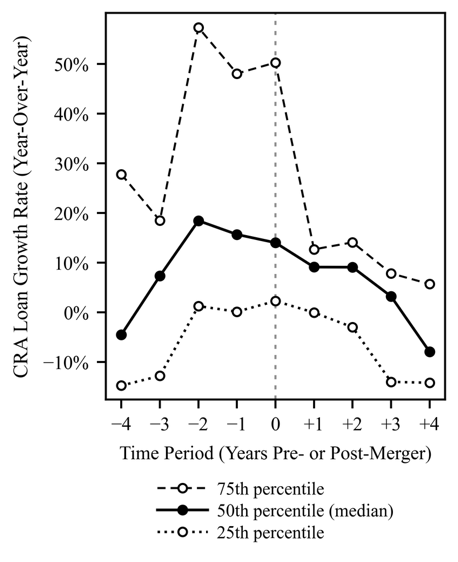
The data show a clear pattern of window dressing. As depicted in Figure 1, the median bank increases its CRA-qualifying loans by more than 15 percent during the year it seeks merger approval. Banks at the 75th percentile boost their CRA lending by a remarkable 50 percent during the merger year. However, these spikes in lending are short-lived. After banks complete their mergers and no longer need regulatory approval, their CRA loan growth rates drop sharply, reverting to at least the pre-merger trend. The temporary nature of these lending spikes indicates that banks view CRA compliance as a regulatory hurdle to clear when expanding rather than as an ongoing responsibility to serve LMI communities.
Figure 1: CRA Loan Growth Rate Pre- and Post-Merger
All Banks
(75th, 50th, and 25th Percentiles)
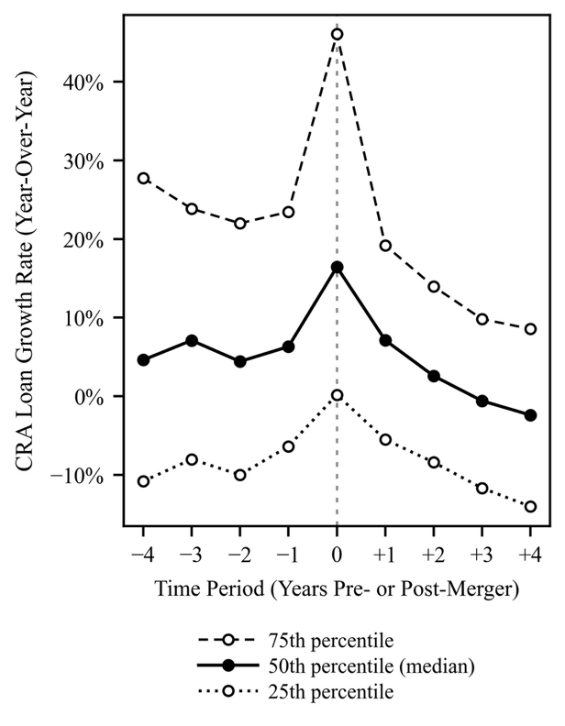
The spikes in CRA loan growth rates depicted in Figure 1 do not necessarily lead to improved CRA ratings for banks. Banks receive new CRA ratings only every three to four years, meaning that a sudden surge in CRA-qualifying lending may not result in an immediate rating upgrade.154 However, strategically boosting CRA lending during a merger application year can still be beneficial for many banks. When reviewing a merger, regulators often consider the applicant’s CRA activity since its most recent evaluation, not just its official rating.155 This review is particularly important when regulators receive negative public comments about a proposed merger.156 Thus, strategically increasing CRA-reportable lending during a merger application year can function as a form of regulatory insurance, in that it helps protect banks from criticism that their previous lending to LMI borrowers has been inadequate.
2. Window Dressing by Bank Size
We find that the window-dressing phenomenon is generally consistent across banks of different sizes. Figures 2 and 3 demonstrate that intermediate banks ($600 million to $2 billion in assets) and large banks ($2 billion to $50 billion) dramatically increase their CRA lending during merger years.157 Indeed, intermediate and large banks in the 75th percentile expand their CRA-qualifying loans by more than 40 percent when seeking merger approval.158 Figure 4 shows that a similar pattern persists among small banks (with $600 million or less in assets), although the magnitude of the spike is somewhat diminished. Interestingly, Figure 5 reveals a distinct pattern among the very largest banks (with more than $50 billion in assets). Rather than the sharp spike in merger years observed among smaller banks, these megabanks exhibit a more gradual and sustained increase in CRA loan growth rates beginning approximately two years before merging. This divergent approach may reflect longer merger planning horizons, anticipation of heightened regulatory and public scrutiny, or a strategic effort to demonstrate consistent commitment rather than a sudden surge in CRA activity.159 Like their smaller competitors, however, megabanks’ CRA loan growth rates decline noticeably in the years following merger approval, suggesting the window dressing motive persists even if the execution differs.
Figure 2: CRA Loan Growth Rate Pre- and Post-Merger
Intermediate Banks ($600 Million to $2 Billion in Assets)
(75th, 50th, and 25th Percentiles)
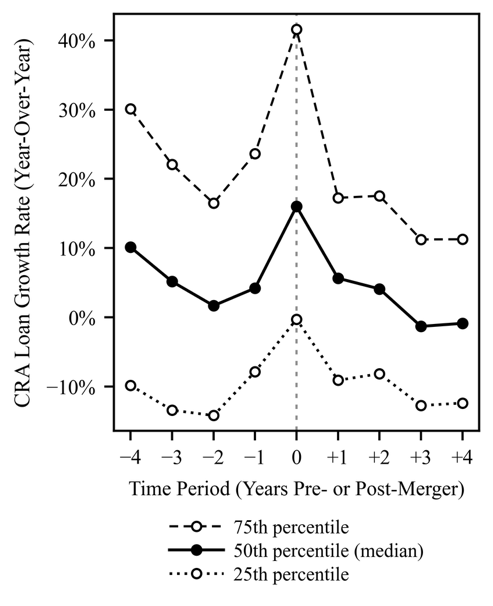
Figure 3: CRA Loan Growth Rate Pre- and Post-Merger
Large Banks ($2 Billion to $50 Billion in Assets)
(75th, 50th, and 25th Percentiles)
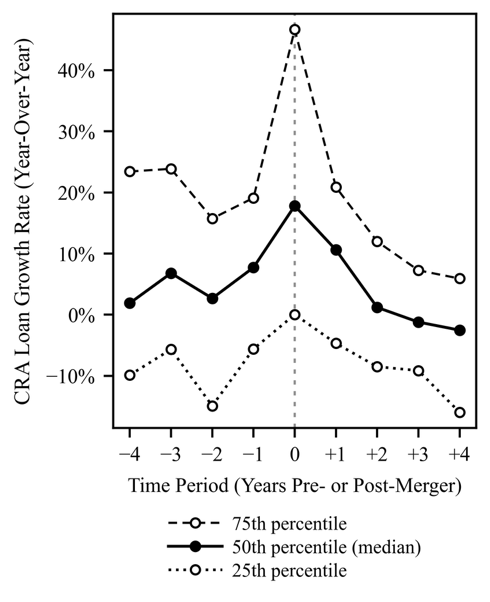
Figure 4: CRA Loan Growth Rate Pre- and Post-Merger—Small Banks (Less Than $600 Million in Assets)
(75th, 50th, and 25th Percentiles)
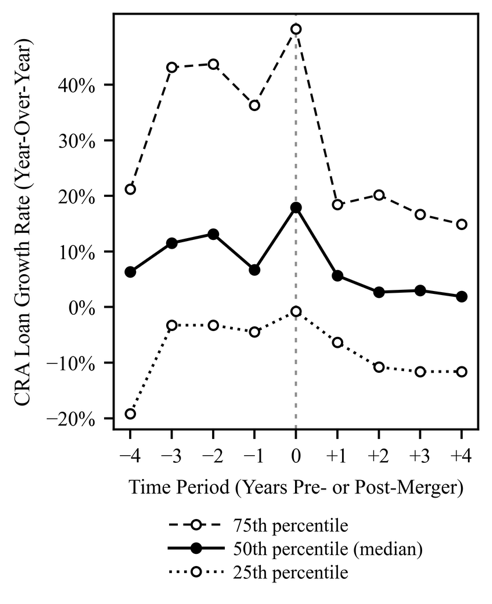
Figure 5: CRA Loan Growth Rate Pre- and Post-Merger—Megabanks (More Than $50 Billion in Assets)
(75th, 50th, and 25th Percentiles)
3. Window Dressing by CRA Rating
Next, we confirm our results by examining whether banks with better CRA ratings window dress more or less than those with worse ratings. We would expect banks with strong ratings to exhibit less strategic manipulation. The results support this hypothesis. As shown in Figure 6, banks with Outstanding ratings show no evidence of merger-related spikes in CRA lending. By contrast, banks with merely Satisfactory CRA records exhibit pronounced window-dressing behavior, substantially increasing CRA lending before merger applications and curtailing it thereafter, as shown in Figure 7.160 This divergence suggests that opportunistic CRA lending is driven by banks’ incentives to remediate or obscure marginal CRA compliance records at moments of regulatory scrutiny. Banks with consistently strong CRA performance appear to internalize community reinvestment as part of their ongoing business model, while lower-rated banks treat the CRA as a contingent regulatory obligation that can be temporarily satisfied when expansion is at stake.
Figure 6: CRA Loan Growth Rate Pre- and Post-Merger
Banks with Outstanding CRA Ratings
(75th, 50th, and 25th Percentiles)
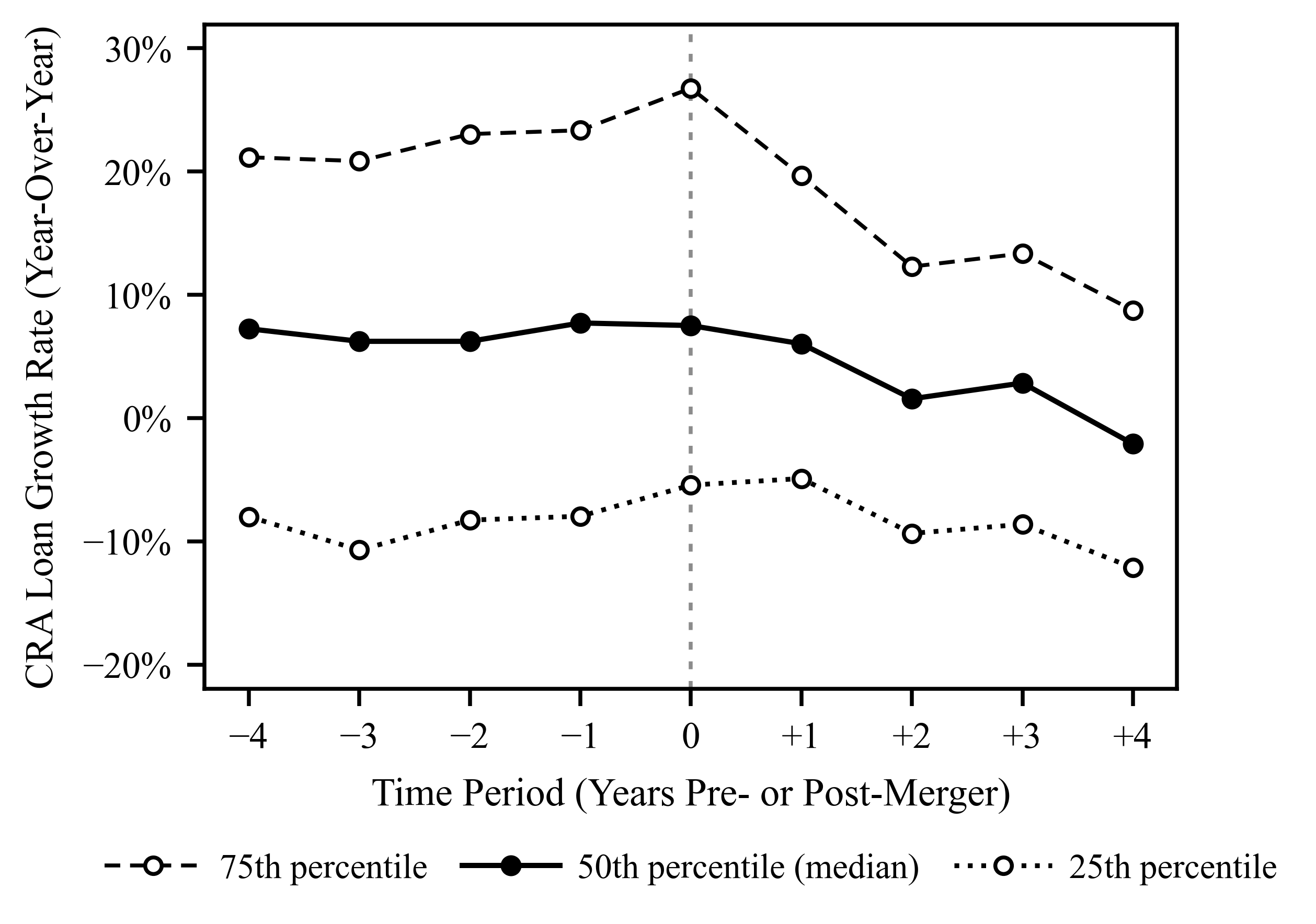
Figure 7: CRA Loan Growth Rate Pre- and Post-Merger
Banks with Satisfactory CRA Ratings
(75th, 50th, and 25th Percentiles)
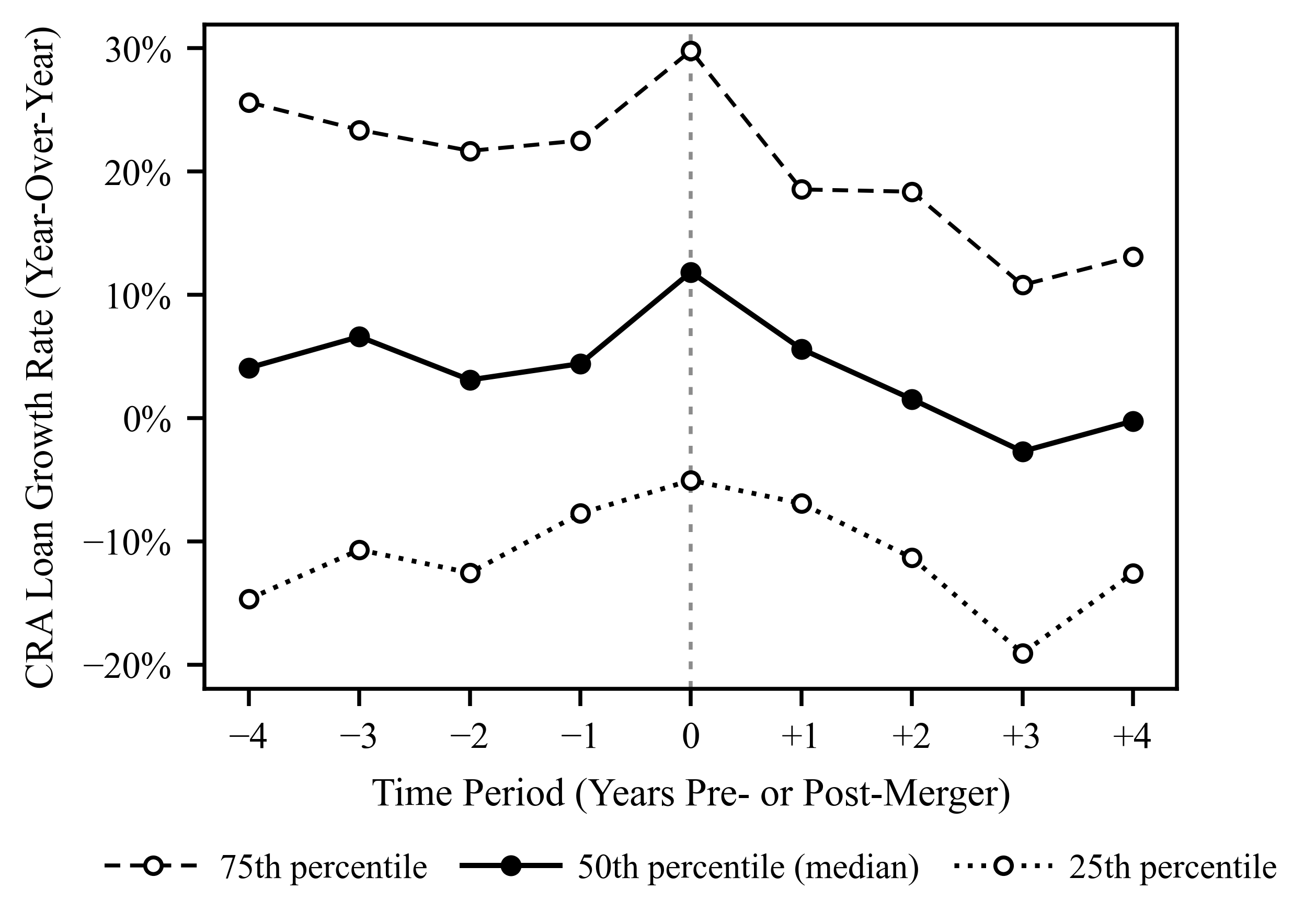
Taken together, Figures 1 through 7 suggest that the CRA’s merger-review mechanism induces time-limited compliance rather than the sustained lending the statute envisions.161 Across most bank size categories, institutions markedly expand CRA-qualifying lending when merger approval is at stake, only to curtail such lending once regulatory approval is secured. This evidence suggests banks have learned to exploit a key weakness in the regulatory framework: By focusing on recent activity rather than long-term commitment, the CRA’s merger-review mechanism encourages strategic manipulation.
4. Robustness Checks
The descriptive figures above strongly suggest that banks increase CRA lending during merger years, but those patterns alone cannot rule out alternative explanations. For example, merger activity could coincide with broader economic expansions, changes in credit demand, or characteristics unique to acquisitive banks. To determine whether this apparent window dressing reflects a robust relationship rather than compositional or cyclical effects, we next estimate regression models that isolate the impact of merger activity on CRA lending. We estimate a regression model that controls for bank size, time-varying economic conditions, and other potential confounding factors.162 The regression results presented in Table 1 confirm that the window-dressing patterns observed in the descriptive figures are both statistically and economically significant. The regressions show that banks increase their CRA-qualifying small business lending growth by approximately 6.6 percentage points in years in which they pursue a merger, relative to non-merger years. The magnitude of this effect is substantial in light of baseline lending growth rates and is robust to the exclusion of the 2008–2010 financial crisis, in which case the estimated effect rises to 7.2 percentage points. These results demonstrate that the merger-related spikes in CRA lending documented above are not artifacts of macroeconomic cycles or compositional changes in the banking sector but instead reflect a systematic behavioral response to regulatory incentives.
| Full Sample | Excluding Crisis Years | |
| Estimated Coefficient | 0.0655*** (0.0217) | 0.0722*** (0.0242) |
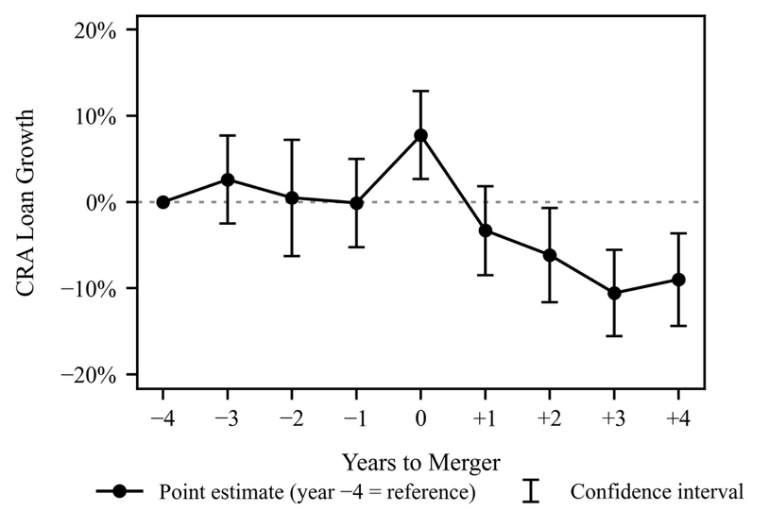
As a final robustness check, we re-estimate the merger effect using a stacked difference-in-differences design with both bank fixed effects and year fixed effects, as shown in Figure 8. This approach compares each merging bank’s CRA lending in the years surrounding its merger to its own pre-merger baseline, while controlling for time-invariant bank characteristics and economy-wide trends. By aligning banks relative to their merger timing and stacking these event windows, the design isolates changes in CRA lending that coincide specifically with merger activity rather than with broader macroeconomic shifts. The results strongly support our findings. The estimates reveal a pronounced and statistically significant spike in CRA lending in the merger year, with no comparable increase in pre-merger years, and an even sharper decline after regulatory approval. This time-limited increase reinforces our conclusion that banks engage in strategic window dressing by temporarily expanding CRA lending when regulatory approval is at stake rather than making sustained changes to their lending practices.
Figure 8: CRA Loan Growth Rate Pre- and Post-Merger, Stacked Difference-in-Differences Framework
The implications of these findings are troubling. Although Congress envisioned CRA merger reviews as a mechanism to encourage ongoing investment in LMI communities,163 banks have learned to game the system through temporary increases in qualifying loans. To be sure, some increase in CRA lending—even if short-lived—may be preferable to no increase at all. But strategic manipulation of CRA lending around mergers is inconsistent with the statutory mandate that banks have a “continuing and affirmative obligation” to serve their entire communities.164
B. Public Disclosure of CRA Ratings Has No Discernible Effect
Our second empirical finding casts doubt on Congress’s other enforcement mechanism: mandatory public disclosure of CRA ratings. When Congress amended the CRA in 1989 to require publication of banks’ CRA scores, lawmakers hoped that disclosure would subject banks to market discipline.165 For market discipline to work, customers and investors should reward banks that serve LMI communities well and punish those that do not. However, our analysis reveals that the market is indifferent to banks’ CRA performance. We find no evidence that disclosure of CRA ratings affects banks’ depositors, borrowers, or investors. We focus on these stakeholders because they represent the primary private constituencies through which public disclosure could discipline banks. Depositors can reward or punish banks by moving their funds, borrowers can alter their demand for bank products and services, and equity investors can incorporate CRA performance into bank valuations and capital costs. If public disclosure of CRA ratings meaningfully affects banks’ reputations or expected profitability, those effects should manifest through the behavior of one or more of these stakeholder groups.
1. Depositors’ Reaction
To evaluate the efficacy of CRA disclosure, we analyze how stakeholders respond when regulators announce changes in banks’ CRA ratings. Our sample consists of more than 11,000 banks supervised by the Federal Reserve and Federal Deposit Insurance Corporation (FDIC) between 1990 and 2023.166 This comprehensive dataset, consisting of over 600,000 bank-quarter observations, allows us to observe not only banks’ CRA ratings but also the precise timing of rating changes, since CRA examination results are not disclosed to the public until a specific release date following the examination.167 Focusing on these release dates enables us to isolate market participants’ reactions to new information about banks’ CRA performance when it is first publicized.
The data reveal that CRA ratings follow a highly skewed distribution, consistent with prior research documenting persistent grade inflation.168 In our sample, 14 percent of banks received an Outstanding rating, 84.4 percent received a Satisfactory rating, 1.5 percent received a Needs to Improve rating, and 0.1 percent received a Substantial Noncompliance rating. Ratings changes are rare. Only 1.1 percent of our observations involve any change in CRA rating, with upgrades being slightly more common than downgrades.169 When changes do occur, they typically involve moving up or down by a single rating level.170
We find no evidence that disclosure of a change in a bank’s CRA rating affects depositors’ behavior. Tables 2 and 3 present our core results.171 The estimated effects of a CRA rating change are both statistically insignificant and economically trivial. For example, in the quarter when a bank’s rating is downgraded, its total deposits increase by 0.003 percent—effectively zero.172 The following quarter, deposits decline by just 0.1 percent.173 Results for more sophisticated funding sources like brokered deposits are similarly negligible.174 Even when we extend the analysis out to four quarters after a rating change, we find no meaningful depositor response.175
| t+0 | t+1 | t+2 | t+3 | t+4 | |
| Estimated Coefficient in Quarter(s) Since Release | 0.00003 (0.0011) | −0.0010 (0.0018) | −0.0021 (0.0023) | −0.0032 (0.0020) | −0.0014 (0.0209) |
| Controlling for… | |||||
| Bank Size | Yes | Yes | Yes | Yes | Yes |
| Interest Rate | Yes | Yes | Yes | Yes | Yes |
| Bank Fixed Effects | Yes | Yes | Yes | Yes | Yes |
| Time Fixed Effects | Yes | Yes | Yes | Yes | Yes |
| Bank-Specific Time Trends | Yes | Yes | Yes | Yes | Yes |
| N | 635,875 | 625,014 | 614,236 | 603,573 | 593,038 |
| t+0 | t+1 | t+2 | t+3 | t+4 | |
| Estimated Coefficient in Quarter(s) Since Release | −0.0149 (0.0230) | −0.0239 (0.0236) | −0.0060 (0.0242) | −0.0059 (0.0251) | 0.0064 (0.0248) |
| Controlling for… | |||||
| Bank Size | Yes | Yes | Yes | Yes | Yes |
| Interest Rate | Yes | Yes | Yes | Yes | Yes |
| Bank Fixed Effects | Yes | Yes | Yes | Yes | Yes |
| Time Fixed Effects | Yes | Yes | Yes | Yes | Yes |
| Bank-Specific Time Trends | Yes | Yes | Yes | Yes | Yes |
| N | 635,874 | 625,013 | 614,235 | 603,572 | 593,037 |
These results show that changes in CRA ratings have no meaningful effect on banks’ deposit funding, reinforcing the conclusion that public disclosure fails to impose market discipline. Following a CRA rating downgrade, neither total deposits nor brokered deposits exhibit statistically or economically significant changes in the contemporaneous quarter or in subsequent quarters. These null effects persist across specifications and time horizons, indicating that depositors are largely indifferent to banks’ CRA performance.
These null results are striking but perhaps unsurprising given the structure of modern deposit insurance. As scholars have long recognized, federal deposit insurance intentionally makes bank deposits informationally insensitive—that is, insured depositors have little reason to monitor their banks’ behavior because their funds are protected even if the bank fails.176 Our findings suggest this dynamic extends to CRA performance: Depositors do not react to CRA ratings because deposit insurance has conditioned them not to monitor banks at all.177
2. Investors’ Reaction
Depositors’ indifference might be explained by deposit insurance, but if public disclosure is to function as an effective enforcement mechanism, it should at least influence market participants who lack such protections. Equity investors represent a potentially promising test case: Unlike depositors, they lack explicit government guarantees and bear the financial consequences of regulatory sanctions and reputational harm. If CRA ratings matter to any market participant, they should matter to equity investors.
We therefore examine whether equity investors react to CRA rating changes. We conduct event studies on publicly traded banks in the Federal Reserve sample, which provides precise release dates for CRA examinations.178 In theory, a bank’s stock price should react to a CRA rating change if investors expect that the change will meaningfully affect the bank’s business.179 We identify five publicly traded, Federal Reserve–supervised banks that received CRA downgrades during our sample period: Goldman Sachs (downgrade announced December 15, 2022), Regions Bank (February 10, 2016), Comerica Bank (February 23, 2015), Bank of New York Mellon (May 26, 2010), and Banco Popular North America (April 29, 2008).180 Event studies of these downgrades, however, reveal no statistically significant stock price reaction. As Table 4 demonstrates, these five banks experienced an abnormal return of just −0.41 percent on the date that their CRA rating downgrades were announced—a statistically insignificant result. By the second day after the announcement, the abnormal stock returns turned slightly positive, the opposite of what we would expect if investors viewed CRA downgrades as material negative information.
| Days Before/After Announcement | Abnormal Returns |
|---|---|
| t−3 | −0.0046 (0.0066) |
| t−2 | −0.0063 (0.0057) |
| t−1 | 0.0013 (0.0064) |
| t = 0 | −0.0041 (0.0040) |
| t+1 | −0.0008 (0.0111) |
| t+2 | 0.0076 (0.0081) |
| t+3 | 0.0014 (0.0028) |
The absence of any meaningful stock price response is striking because these five banks are large, well-known institutions that receive extensive press coverage. Financial markets closely monitor these banks’ activities, suggesting that investors should be particularly attuned to negative information about their regulatory compliance. Yet even for these high-profile banks, CRA downgrades appear not to matter to investors. This finding reinforces our broader conclusion about the ineffectiveness of CRA disclosure: Just as depositors do not respond to CRA ratings, equity investors also appear indifferent to banks’ CRA performance.
3. Borrowers’ Reaction
As a final possibility, we examine whether bank borrowers respond to public disclosure of CRA performance. This analysis faces inherent data limitations. Unlike depositors who can withdraw funds or shareholders who can sell stock, existing borrowers generally cannot sever ties with a poorly performing bank immediately. Additionally, banks report only their outstanding loan balances, not new loan originations, and many loans have multi-year terms.181 Any shift in borrower behavior would therefore appear gradually in balance sheet data as old loans mature and are replaced (or not) by new ones. We therefore would not expect to find significant short-term responses by borrowers.
Despite these limitations, we test whether CRA rating changes affect banks’ commercial real estate and commercial lending portfolios. The results suggest borrowers, like depositors and investors, are largely indifferent to CRA ratings. Commercial real estate lending shows no discernible response to rating changes, as depicted in Table 5. Commercial loans exhibit a modest 1.6 percent decline in the quarter a downgrade is announced, but this effect is transitory and dissipates in subsequent quarters, as depicted in Table 6. These findings reinforce our broader conclusion that public disclosure of CRA ratings fails to meaningfully influence any major stakeholder group.
| t+0 | t+1 | t+2 | t+3 | t+4 | |
| Estimated Coefficient in Quarter(s) Since Release | −0.0053 (0.0045) | −0.0051 (0.0042) | −0.0069 (0.0043) | −0.0023 (0.0042) | −0.0018 (0.0049) |
| Controlling for… | |||||
| Bank Size | Yes | Yes | Yes | Yes | Yes |
| Interest Rate | Yes | Yes | Yes | Yes | Yes |
| Bank Fixed Effects | Yes | Yes | Yes | Yes | Yes |
| Time Fixed Effects | Yes | Yes | Yes | Yes | Yes |
| Bank-Specific Time Trends | Yes | Yes | Yes | Yes | Yes |
| N | 462,380 | 451,868 | 441,484 | 431,253 | 421,193 |
Real Estate Loans
| t+0 | t+1 | t+2 | t+3 | t+4 | ||
| Estimated Coefficient in Quarter(s) Since Release | −0.0163** (0.0082) | −0.0131 (0.0088) | −0.0155* (0.0089) | −0.0116 (0.0088) | −0.0131 (0.0082) | |
| Controlling for… | ||||||
| Bank Size | Yes | Yes | Yes | Yes | Yes | |
| Interest Rate | Yes | Yes | Yes | Yes | Yes | |
| Bank Fixed Effects | Yes | Yes | Yes | Yes | Yes | |
| Time Fixed Effects | Yes | Yes | Yes | Yes | Yes | |
| Bank-Specific Time Trends | Yes | Yes | Yes | Yes | Yes | |
| N | 635,814 | 624,889 | 614,062 | 603,363 | 592,799 | |
In summary, the empirical evidence presented in this Part reveals a consistent and troubling pattern: Neither of the CRA’s enforcement mechanisms meaningfully influences banks’ behavior in the manner Congress intended. Merger review induces sharp but short-lived increases in CRA-qualifying lending, a form of regulatory window dressing that allows banks to satisfy supervisory scrutiny without altering their long-run lending strategies. This result is robust to a variety of empirical tests and is concentrated among banks with weaker baseline CRA performance—precisely those institutions for which enforcement should matter most. Rather than encouraging sustained investment in LMI communities, merger review appears to incentivize opportunistic compliance.
At the same time, public disclosure of CRA ratings fails to create market discipline. Across all major stakeholder groups—depositors, equity investors, and borrowers—we find no evidence that CRA rating changes affect banks’ financial outcomes. Stakeholders’ indifference to banks’ CRA ratings suggests that public disclosure does not motivate banks to prioritize LMI lending.
These findings expose a critical weakness at the heart of the CRA: Banks have little reason to care about their ratings because the enforcement mechanisms impose few tangible consequences for poor performance. Efforts to refine CRA rating methodologies—the focus of recent reform efforts—cannot address this central problem. Part III therefore considers more substantial reforms to CRA enforcement and examines whether alternative policy approaches might better achieve lasting financial inclusion.
III. Ensuring LMI Communities Can Access Financial Services
If the CRA’s enforcement mechanisms do not reliably induce sustained investment in underserved communities, policymakers may need to consider whether financial inclusion can realistically be achieved through indirect incentives alone. Our empirical findings suggest that they must rethink the CRA’s enforcement mechanisms—or perhaps the CRA itself. This Part explores how policymakers can best ensure equitable access to financial services in light of weaknesses in CRA enforcement. Section III.A suggests strategies for strengthening CRA enforcement under the existing statutory framework. If implemented, these approaches might better incentivize banks to make meaningful and sustained investments in LMI areas. Even if policymakers bolster CRA enforcement, however, our findings call into question whether the CRA is sufficient to ensure that LMI communities have reliable access to financial services. Accordingly, Section III.B examines alternative financial inclusion policies, such as those used in some states and in other developed countries, that could promote credit access more effectively than the CRA.
A. Strengthening CRA Enforcement
At a minimum, the federal banking agencies should implement better enforcement mechanisms if they continue to rely on the CRA as the United States’ primary financial inclusion strategy. This Section recommends three such enforcement strategies, most of which the agencies could pursue under existing law: (1) evaluating banks’ historical CRA ratings in connection with expansionary applications, (2) enhancing public disclosure of CRA ratings to increase accessibility, and (3) rewarding banks for strong CRA performance or sanctioning them for weak performance. Although each of these techniques has potential drawbacks, implementing them alone or in combination could help fix some of the shortcomings in the current CRA framework.
1. Evaluating Historical CRA Ratings
Assessing a bank’s historical CRA performance when it submits an expansionary application could help the banking agencies combat the CRA’s window-dressing problem. Recall that under the current approach, when a bank proposes to merge or open a new branch, the relevant agency considers the bank’s performance at its most recent CRA exam and thereafter.182 This short-term time horizon likely encourages window dressing: If a bank knows that regulators look at only its recent CRA activity, it can opportunistically increase LMI lending when it decides to expand. If, instead, regulators considered the bank’s CRA performance over a longer time horizon, the bank would have more incentive to make long-term, sustained investments in LMI areas.
Professor Jeremy Kress has previously proposed expanding the time horizon over which regulators assess a bank merger applicant’s CRA record. As Kress has written, “the agencies could take into account all of a bank’s CRA performance evaluations, rather than only its most recent evaluation, to assess its long-term commitment to LMI areas.”183 Moreover, Kress recommends that regulators elevate the CRA scores required for applications to merit approval. Instead of approving applications by banks with at least Satisfactory CRA ratings, the agencies could “insist that an acquirer have received an Outstanding overall rating on two out of its most recent three CRA exams to obtain regulatory approval for a merger.”184 As Kress explains, evaluating multiple CRA exams and setting a high bar for approval would ensure that a bank is permitted to expand “only if it is genuinely committed to serving LMI neighborhoods.”185 Senator Elizabeth Warren incorporated these reforms into proposed legislation she introduced in 2021.186
Of course, considering historical CRA ratings in connection with expansionary proposals is unlikely to solve all the CRA’s problems. Despite the rapid consolidation of the banking sector over the past three decades, relatively few banks engage in mergers.187 During our sample period, only 4 percent of banks, on average, acquired another bank during a given year.188 In total, only 22.3 percent of banks acquired another bank at any point during our twenty-two-year sample period.189 Accordingly, considering historical CRA ratings in connection with merger proposals could encourage some acquisitive banks to make long-term, sustained investments in LMI areas instead of opportunistically increasing LMI lending whenever they want to merge. But, for the majority of banks that will not buy another bank in the foreseeable future, assessing historical CRA performance in connection with merger applications would likely have little effect on their behavior.
2. Enhancing Public Disclosure
As an additional enforcement strategy, policymakers could enhance public disclosure of banks’ CRA performance. One possible explanation for why stakeholders do not react to public disclosure of banks’ CRA ratings is that the disclosure channels are ineffective.190 Today, the banking agencies post banks’ CRA evaluations on the agencies’ websites, and a bank is required to maintain a physical copy of its CRA evaluation for public inspection at each of its branches.191 However, few people know to look for a bank’s CRA rating, public CRA disclosures are often technical and convoluted, and the media rarely covers banks’ CRA performance.192 As Professors Conti-Brown and Feinstein have asserted, “[t]he publicly available information is simply not useful to non-experts in its current form.”193 If CRA ratings were disclosed in a more accessible and user-friendly format, perhaps bank stakeholders—and banks themselves—would care more about CRA performance.
Some scholars have, in fact, proposed enhancing CRA disclosures to make them more effective. Professors Conti-Brown and Feinstein, for example, envision a website “where users could enter a bank’s name . . . and view not only the bank’s grade on its most recent CRA exam, but also its share of lending to low-income communities, how that share compares to other banks, and whether its community-lending posture is improving or declining over time.”194 Similarly, Professor Raymond Brescia and Sonia Steinway suggest creating “community impact report cards” for banks, modeled on New York City’s system for grading restaurants, that would generate “a single score for each bank . . . on a scale of 1–100” based on its responsiveness to community needs.195 In theory, these enhanced disclosures could allow customers to more “easily comparison shop between banks” and induce depositors to move their funds from low-rated to highly rated institutions.196
Enhancing CRA disclosure is worth trying, but this strategy may prove to be less effective than its proponents expect. Professor Archon Fung and colleagues have studied when disclosure works as a regulatory device—and when it does not.197 According to these scholars, for a disclosure regime to work, the intended recipients of the disclosures must (1) take in and process the information and (2) alter their behavior based on what they learn.198 User-friendly disclosures might increase the likelihood that bank customers take in and process CRA ratings, but it is unclear whether bank customers would actually alter their behavior in response to this new information. Indeed, much of the United States’ bank regulatory framework is designed to make deposits informationally insensitive.199 Federal deposit insurance assures depositors that they will be paid back if their bank fails, and, as a result, retail depositors tend not to monitor their banks.200 Moreover, depositors often feel stuck with their banks because of automatic bill payments and other customer lock-in effects.201 Thus, bank deposits are notoriously “sticky”—depositors rarely, if ever, switch banks for any reason.202 Accordingly, the supposition that enhanced CRA disclosures will impose market discipline on banks is at odds with the reality that retail depositors tend not to move their deposits.
To be sure, there are reasons to suspect that at least some bank customers might alter their behavior in response to more user-friendly CRA disclosures. For instance, the societal emphasis on diversity, equity, and inclusion since the Black Lives Matter movement may encourage socially conscious depositors to seek out banks with strong CRA performance.203 Moreover, regulators have taken steps to make it easier for depositors to switch banks than it has been in the past.204 Policymakers should try to capitalize on these developments by implementing more user-friendly CRA disclosures. However, the longstanding forces that discourage bank depositors from switching banks should temper expectations about relying on enhanced disclosures as a CRA enforcement technique.
3. Implementing New Carrots and Sticks
Finally, policymakers could implement stronger “carrots and sticks” to incentivize banks to comply with the CRA. Policymakers could reward banks that excel under the CRA in several ways. For example, Professors Keith Hylton and Vincent Rougeau have suggested subsidizing banks with strong CRA ratings.205 Subsidies could include direct transfer payments or a modest relaxation of minimum capital requirements for banks that perform well on CRA exams.206 Subsidizing high-performing banks in these ways would directly boost their bottom lines. As a result, a subsidy approach may prove to be an effective “carrot” for a broad cross-section of banks.
Similarly, policymakers could impose a range of potential sanctions on banks that fail to meet the credit needs of their communities. Congresswoman Maxine Waters has proposed levying civil monetary penalties against banks that have inadequate CRA compliance records.207 Professor Anthony Taibi has emphasized that a fine for poor CRA performance should be “stiff” and “perhaps . . . equal to the return earned on the amount of funds by which the institution is deficient.”208 The banking agencies actually proposed the termination of deposit insurance as a potential sanction for a Substantial Noncompliance rating in their 1995 CRA overhaul but ultimately backed off this approach in the final rule.209 Less extreme sanctions could include limitations on dividends, share buybacks, and executive bonus payments—similar to the penalties currently imposed on banks for poor financial performance.210 If financial penalties were a credible threat, this “stick” could motivate more banks to try to achieve CRA compliance.
Of course, there are potential downsides to a more aggressive carrot-and-stick approach to CRA enforcement. For example, the banking agencies might lack statutory authority to impose additional sanctions on poor-performing banks under existing law. Under the canon of expressio unius est exclusio alterius, it is generally understood that the inclusion of one concept in a statute implies the exclusion of alternative, omitted concepts.211 Since the CRA already provides a sanction for poor CRA performance—namely, adverse treatment when a bank applies for regulatory approval of an expansionary proposal—the banking agencies may not have authority to impose additional sanctions.212 To be sure, Congress could amend the CRA to expressly authorize the agencies to levy financial penalties on poorly performing banks. Absent congressional authorization, however, additional sticks would likely provoke stiff resistance—and legal challenges—from the banking sector.213
Banks might be more amenable to new carrots as a reward for strong CRA performance, but this approach could have underappreciated downsides. Some scholars contend that the government already generously subsidizes banks as a quid pro quo for fulfilling their CRA obligations.214 On this view, granting additional subsidies would be excessive and unjustified.215 Additionally, several scholars have argued that directly subsidizing banks in exchange for lending to LMI communities is economically inefficient.216 Instead of paying banks to serve LMI areas, these scholars insist, policymakers should assist underserved populations directly through the tax-and-transfer system.217 Finally, rewarding high-performing banks by relaxing prudential regulations such as capital requirements could increase risks in the banking system.218 Although CRA-qualifying loans have traditionally performed at least as well as other loans,219 reducing capital requirements for highly rated banks would give these institutions less financial cushion if CRA loans were to deteriorate in the future.
Despite these challenges, policymakers should seriously consider implementing new carrots and sticks to better incentivize CRA performance. Coupled with the other reforms discussed in this Section, a revamped approach to CRA enforcement could help alleviate some of the flaws evident in the current CRA framework. Nonetheless, each of these suggested enforcement techniques suffers from potential drawbacks and limitations, and none is guaranteed to solve the United States’ longstanding financial inclusion problem. Faced with fifty years of lackluster results, it is fair to ask whether the CRA—even with more robust enforcement techniques—is up to the task of reversing decades of systematic discrimination and exclusion, or whether the United States should stop relying on the CRA as its primary financial inclusion strategy. Accordingly, the next Section examines alternative financial inclusion strategies that could promote LMI lending more effectively than even a reformed CRA.
B. Exploring Complements or Alternatives to the CRA
As policymakers consider ways to improve CRA enforcement, they may also need to grapple with the possibility that strengthening the CRA alone may be insufficient to address financial exclusion. Section III.A outlined several potential enhancements to the CRA, but none represents a comprehensive solution to its fundamental limitations. Policymakers should therefore consider both strengthening CRA enforcement and exploring complementary or alternative approaches to more effectively promote financial inclusion.
Some critics have argued that the United States should scrap the CRA and abandon governmental attempts to encourage LMI lending.220 Proponents of repealing the CRA insist that free market mechanisms will ensure LMI individuals and businesses have ample access to credit.221 They contend that “competition in credit markets has driven (or will drive) out discriminatory or abusive practices” and “in the long run . . . discrimination will disappear.”222 These critics point to progress in LMI lending since the 1970s—attributing such advancements not to the CRA, but rather to the deregulation of intrastate and interstate banking.223 On this view, the United States did not need a government policy to promote LMI lending when it adopted the CRA in 1977, and it does not need one today.
This conclusion is wrong. By definition, a free market excludes consumers who are unable or unwilling to pay the price demanded by profit-maximizing firms.224 In the market for credit, these consumers may include creditworthy entrepreneurs or potential homebuyers who are unprofitable or only minimally profitable for lenders to serve. Professor Adam Levitin has described this phenomenon as a “financial inclusion trilemma.”225 As Levitin explains, “it is not possible for financial institutions to profitably provide low-income consumers with financial services on non-exploitative terms at scale.”226 Given these market dynamics, it should be unsurprising that “soft governmental nudges” like the CRA have not succeeded in satisfying the credit needs of LMI communities.227
Instead of scrapping the CRA entirely, lawmakers should consider complementary or alternative policies to promote credit availability. For example, policymakers could (1) require banks to serve LMI communities under a universal service mandate or (2) provide credit directly to LMI communities through public banks. Other countries that have implemented universal service mandates and public banking tend to feature more inclusive financial systems.228 While these strategies would undoubtedly encounter serious political and practical obstacles in the United States, fifty years of experimentation with the CRA suggests that our current approach to LMI lending is not working and that a broader reconsideration of the available policy options may be warranted.
1. Universal Service Mandate
Rather than encouraging banks to lend to underserved borrowers through the CRA, policymakers could instead force banks to serve LMI communities through a universal service mandate. Pointing to the success of universal service mandates in other regulated industries and in international banking markets, Professors Morgan Ricks and Adam Levitin have proposed service mandates to expand financial inclusion in the United States.229 As Levitin explained, “In contrast with a soft mandate like the CRA, a hard mandate would require banks to provide certain services at certain terms, irrespective of their stand-alone profitability . . . .”230 Although universal service mandates raise a host of potential issues, a carefully crafted mandate could help the United States achieve financial inclusion and credit accessibility that have remained elusive to date.
Universal service mandates are a common feature of regulated industries throughout the United States. As Professor Ricks describes, a universal service mandate “refer[s] to any context in which regulated firms must serve some classes of customers at prices below cost, in order to promote broad access.”231 Local utilities, such as electric and gas companies, are subject to universal service mandates, requiring them to “adequately serve all customers within their franchise area—even if this requires unprofitable investment—and they may not charge higher prices to more remote customers.”232 Similarly, “regulators . . . require telephone companies to offer service at uniform rates to all residential subscribers in their service areas, regardless of the cost of serving hard-to-reach customers.”233 The postal system, airlines, railroads, and motor carriers are among other utility-type industries that have been subject to universal service mandates throughout history.234
The modern banking system shares similarities with the regulated industries that U.S. policymakers have traditionally subjected to universal service mandates. Indeed, the banking system—like electric grids, gas networks, and telephone networks—is “optimally supplied as [an] integrated system[].”235 For most people, access to basic financial services—including a deposit account and reliable and affordable credit—is a basic economic necessity akin to water and electricity. Thus, “Imposing universal service-type obligations on chartered banks . . . would place banking squarely within the domain of regulated industries, where such universal service obligations are standard fare.”236 Consistent with this logic, numerous other jurisdictions—including the European Union, the United Kingdom, and Canada—have imposed forms of universal service mandates on their banks.237
As applied to the U.S. banking system, a universal service mandate could ameliorate many aspects of the country’s financial inclusion problem. Under a universal service mandate, a bank could be required to operate branches in all communities in which it is licensed, including in LMI areas.238 Similarly, a bank would be required to “open and maintain accounts for all comers,” regardless of their profit potential.239 Whereas the CRA creates soft incentives for banks to operate branches in and provide services to diverse communities, a universal service mandate could require them to do so.
To be sure, lending to LMI borrowers—the CRA’s core purpose—could be challenging to effectuate under a universal service mandate. In fact, most scholarly proposals for bank service mandates focus on the provision of deposit accounts rather than lending.240 As Professor Levitin has noted, a service mandate for credit would “raise materially different issues” than a service mandate limited to deposit accounts.241 Among other things, a universal lending mandate could expose banks to elevated credit risks or force banks to divert funds from more productive or lower-risk uses. These issues, however, could be at least partially mitigated by establishing clear underwriting guidelines for the types of loans banks must issue under the mandate and by expanding government loan guarantee programs to absorb some or all of the credit risk associated with higher-risk loans. Moreover, even a narrow universal service mandate limited to deposit accounts could indirectly expand credit access.242 Indeed, the federal banking agencies have documented that deposit products “can help consumers qualify for loans by facilitating consumers’ savings” and “are a pathway for a bank customer to establish an ongoing relationship with a bank.”243 Thus, expanding credit access through a universal service mandate may pose implementation challenges, but the hurdles may not be insurmountable, and a universal service mandate could be a viable alternative or complement to the CRA.
2. Public Banking
If the CRA does not adequately incentivize private banks to serve LMI communities, the public sector could potentially fill the void. Indeed, many countries around the world use public banking to meet the needs of individuals and businesses who have historically been excluded from the private banking system.244 The United States experimented with public banking through the post office during the early twentieth century, but it discontinued the U.S. Postal Savings System a decade before enacting the CRA.245 In light of this Article’s evidence that the CRA has not solved the United States’ financial inclusion problem, policymakers could consider reviving public banking to expand financial services to populations that the private sector neglects.
In response to persistent financial exclusion, some scholars have proposed strategies for bringing public banking back to the United States. Most prominently, Professor Mehrsa Baradaran has advocated for reviving postal banking.246 According to Baradaran, the Post Office “is in a unique position to provide much-needed financial services for the large population of unbanked or underbanked Americans” because “it already has branches in many low-income neighborhoods” and “people at every level of society . . . have a level of familiarity and comfort with the Post Office.”247 As an alternative, Professors John Crawford, Lev Menand, and Morgan Ricks have proposed public banking through the Federal Reserve System.248 Under this approach, any American who wanted a no-cost bank account through the Federal Reserve could get one, in much the same way that private banks maintain accounts at the central bank.249 The authors contend that Federal Reserve accounts “would attract millions of people who currently choose not to or are unable to maintain bank accounts, dramatically reducing the number of un- and underbanked households.”250
Although implementation details differ by country, public banking is very common internationally. In Germany, for example, the Sparkassen system of municipal savings banks serves as a critical source of financing for small businesses and local communities.251 Japan’s postal bank is one of that country’s largest providers of financial services.252 The United Kingdom, Italy, Switzerland, France, and New Zealand also provide various forms of financial services through their post offices.253 Accordingly, the United States is “very much the outlier” in not having a public banking option.254 Notably, countries with public banking options feature unbanked rates far lower than in the United States.255
A public bank may be well-suited to provide deposit accounts to the unbanked, but it is less clear that such a bank could replace the CRA by extending credit to LMI communities. Indeed, the public provision of credit might pose several political and practical challenges. Most significantly, lending through a public bank could raise the prospect of “politicized allocation of credit.”256 As Professor Levitin explained, “When the government is in a position to decide which borrowers may obtain credit and on what terms, the credit-granting decision may . . . include political considerations.”257 Moreover, a public bank that extends credit would have to collect from borrowers that default on their loans. Collection might be an “awkward fit” for a public bank “because it puts the government in an adverse role to those very consumers it seeks to help.”258 In part due to these concerns, the U.S. Postal Savings System only took deposits and did not lend to the public.259
While concerns about public credit provision merit attention, there is some precedent to suggest that a public bank could successfully expand credit availability. One U.S. state—North Dakota—has run a government-owned bank since 1919.260 The Bank of North Dakota has a lengthy track record of lending to individuals, farms, and small businesses.261 The Bank of North Dakota mitigates concerns about collections and the political allocation of capital by partnering with local community banks and credit unions to underwrite commercial and consumer loans, which the state-run bank then purchases.262 The Bank of North Dakota’s public provision of credit has helped to boost the state’s small business lending to three times the national average on a per capita basis.263 As Professor Saule Omarova has noted, “[i]n the absence of hard profitability constraints, a public lender has more flexibility to extend low-cost credit to traditionally disadvantaged consumers, communities, small and medium-sized businesses, and budget-strapped public sector entities.”264
Of course, embracing public banking as an alternative or complement to the CRA would represent a significant shift in federal policy, and lawmakers would need to carefully consider potential challenges with public credit allocation. However, in light of successful public banks in other countries and in North Dakota, the United States could revive its previous experiment with a federal public bank to help solve the persistent financial inclusion problem that the CRA has failed to solve.
Conclusion
Nearly fifty years after its enactment, the CRA’s mixed track record has prompted renewed scrutiny of the law’s effectiveness as a tool for promoting financial inclusion. Much attention has focused on issues like grade inflation and the CRA’s outdated geographic focus, and the much-heralded 2023 Rule sought to address these problems. However, this Article identifies a more fundamental shortcoming: The CRA’s enforcement mechanisms do not work. Our empirical analysis reveals that banks strategically manipulate their CRA lending around mergers and that public disclosure of CRA ratings has no discernible effect on stakeholders’ behavior. These findings suggest that even if the 2023 Rule survives legal challenges and the Trump Administration’s attempted repeal, it will not meaningfully improve banks’ service to LMI communities.
This Article proposes a more promising path forward for CRA reform: strengthening CRA enforcement. Some relatively modest reforms could improve enforcement within the existing statutory framework, such as considering banks’ historical CRA ratings when reviewing merger applications, enhancing public disclosure requirements, or creating stronger incentives and penalties for compliance. However, given the persistence of financial exclusion in the United States, more dramatic changes may be necessary. Policymakers could consider imposing a universal service mandate on banks or establishing a public banking option, as many other countries have done. While these alternatives would face significant political and practical obstacles, our findings suggest that continuing to rely on the CRA’s current enforcement approach will likely perpetuate the systematic exclusion of disadvantaged communities from the mainstream financial system.
Beyond its implications for the CRA, this Article offers a broader lesson about the limits of regulatory strategies that rely on indirect incentives and episodic enforcement to achieve durable social objectives. When legal obligations are enforced only intermittently or through reputational channels, regulated entities predictably learn to comply strategically rather than substantively. The CRA’s experience illustrates how even well-intentioned statutes can fall short when enforcement mechanisms fail to align private incentives with public goals. As policymakers confront persistent challenges in areas ranging from financial inclusion to climate risk and consumer protection, the CRA’s enforcement record serves as a cautionary example: Regulatory objectives must be matched with enforcement strategies capable of sustaining compliance over time.
Appendix
Tables A1 and A2 present robustness checks on our primary depositor-stigma analysis in Tables 2 and 3 above. To ensure our findings are not driven by the extraordinary market conditions during the 2008–2010 financial crisis, we estimate our core specifications after excluding observations from those years. The results remain quantitatively and qualitatively similar to our main findings. CRA rating downgrades continue to have no statistically or economically significant effect on deposit volumes, confirming that our conclusions about depositor indifference to CRA ratings are not an artifact of crisis-period dynamics.
Table A1: Impact of CRA Rating Downgrade on Total Deposits (excluding years 2008–2010)
| t+0 | t+1 | t+2 | t+3 | t+4 | ||
| Estimated Coefficient in Quarter(s) Since Release | 0.0001 (0.0011) | −0.0011 (0.0019) | −0.0014 (0.0024) | −0.0024 (0.0020) | −0.0010 (0.0022) | |
| Controlling for… | ||||||
| Bank Size | Yes | Yes | Yes | Yes | Yes | |
| Interest Rate | Yes | Yes | Yes | Yes | Yes | |
| Bank Fixed Effects | Yes | Yes | Yes | Yes | Yes | |
| Time Fixed Effects | Yes | Yes | Yes | Yes | Yes | |
| Bank-Specific Time Trends | Yes | Yes | Yes | Yes | Yes | |
| N | 569,292 | 558,483 | 547,759 | 537,160 | 526,690 | |
Table A2: Impact of CRA Rating Downgrade on Brokered Deposits (excluding years 2008–2010)
| t+0 | t+1 | t+2 | t+3 | t+4 | ||
| Estimated Coefficient in Quarter(s) Since Release | −0.0183 (0.0234) | −0.0298 (0.0237) | −0.0205 (0.0245) | −0.0186 (0.0251) | 0.00216 (0.0249) | |
| Controlling for… | ||||||
| Bank Size | Yes | Yes | Yes | Yes | Yes | |
| Interest Rate | Yes | Yes | Yes | Yes | Yes | |
| Bank Fixed Effects | Yes | Yes | Yes | Yes | Yes | |
| Time Fixed Effects | Yes | Yes | Yes | Yes | Yes | |
| Bank-Specific Time Trends | Yes | Yes | Yes | Yes | Yes | |
| N | 569,291 | 558,482 | 547,758 | 537,159 | 526,689 | |
- See, e.g., Adam J. Levitin, The Financial Inclusion Trilemma, 41 Yale J. on Regul. 109, 111 (2024) (“[A] sizeable share of the U.S. population remains without access to mainstream financial services from banks.”). ↩︎
- See Mehrsa Baradaran, The Color of Money: Black Banks and the Racial Wealth Gap 10–39 (2017) (discussing Blacks’ lack of access to credit after the Civil War). ↩︎
- See Richard Rothstein, The Color of Law: A Forgotten History of How Our Government Segregated America 108–13 (2017) (discussing redlining). ↩︎
- Community Reinvestment Act of 1977, Pub. L. No. 95-128, 91 Stat. 1147 (codified as amended at 12 U.S.C. §§ 2901–08). ↩︎
- 12 U.S.C. § 2901(a)(3). ↩︎
- Id. § 2903(a). ↩︎
- Id. § 2906(b)(2). ↩︎
- In 2023, Black and Hispanic applicants were denied conventional home purchase mortgages at rates of 16.7 and 12 percent, compared to 5.8 percent for white applicants. See Consumer Fin. Prot. Bureau, 2023 Mortgage Market Activity and Trends 36 (2024), https://files.consumerfinance
.gov/f/documents/cfpb_2023-mortgage-market-activity-and-trends_2024-12.pdf [https://perma.cc/3DF
K-KCVM]. Meanwhile, only 16 percent of Black-owned small businesses received all the credit they applied for, compared to 35 percent of white-owned businesses. See Bd. of Governors of the Fed. Rsrv. Sys., Availability of Credit to Small Businesses 25 (2022) [hereinafter Availability of Credit to Small Businesses], https://www.federalreserve.gov/publications/files/sbfreport2022.pdf [https://perma.cc/EQX8-6Q6H]. In 2024, 51 percent of Black adults and 44 percent of Hispanic adults reported being turned down for credit or receiving less credit than requested in the past year, compared to 26 percent of white adults. See Bd. of Governors of the Fed. Rsrv. Sys., Economic Well-Being of U.S. Households in 2024, at 55–56 (2025), https://www.federalreserve.gov/publications/files/20
24-report-economic-well-being-us-households-202505.pdf [https://perma.cc/RNQ2-ZF3D]. Disparities persisted even after controlling for other characteristics such as income and age. See id. ↩︎ - See Michael S. Barr, No Slack: The Financial Lives of Low-Income Americans 54–82 (2012) (documenting use of alternative financial service providers by low-income Americans). ↩︎
- See Baradaran, supra note 2, at 260–61 (discussing the racial wealth gap). ↩︎
- See Michael S. Barr, Credit Where It Counts: The Community Reinvestment Act and Its Critics, 80 N.Y.U. L. Rev. 513, 561–80 (2005) (documenting evidence that the CRA has expanded access to home mortgage lending). ↩︎
- In the words of Professor Adam Levitin, “it is not possible for financial institutions to profitably provide low-income consumers with financial services on non-exploitative terms at scale.” Levitin, supra note 1, at 112. ↩︎
- Peter Conti-Brown & Brian D. Feinstein, Banking on a Curve: How to Restore the Community Reinvestment Act, 13 Harv. Bus. L. Rev. 335, 338 (2023). ↩︎
- See id. ↩︎
- See Lindsay Sain Jones & Goldburn Maynard Jr., Rebooting the Community Reinvestment Act, 61 Am. Bus. L.J. 167, 189 (2024) (“Currently, banks’ performance of their obligations under the CRA is evaluated per each of their delineated ‘assessment areas.’ . . . [T]hese assessment areas comprise the geographic areas that can reasonably be served by each of a bank’s locations, including its main office, branches, and deposit-taking ATMs.”). ↩︎
- See id. (“While these so-called facility-based assessment areas were reasonable when the CRA was enacted and banking was still local, they no longer reflect the realities of modern banking.”). ↩︎
- See Community Reinvestment Act, 89 Fed. Reg. 6574 (Feb. 1, 2024) (codified in scattered sections of 12 C.F.R.). The federal banking agencies are the Federal Deposit Insurance Corporation, the Office of the Comptroller of the Currency, and the Board of Governors of the Federal Reserve System. See Michael S. Barr, Howell E. Jackson & Margaret E. Tahyar, Financial Regulation: Law and Policy 175–76 (3d ed. 2021). ↩︎
- See infra Section I.C (describing the 2023 CRA Rule). ↩︎
- See Tex. Bankers Ass’n v. Off. of the Comptroller, 728 F. Supp. 3d 412 (N.D. Tex. 2024) (order granting preliminary injunction), appeal filed sub nom. Tex. Bankers Ass’n v. Bd. of Governors of the Fed. Rsrv. Sys., No. 24-10367 (5th Cir. filed Apr. 26, 2024). ↩︎
- See Community Reinvestment Act Regulations, 90 Fed. Reg. 34086 (proposed July 18, 2025) (to be codified in scattered sections of 12 C.F.R.). ↩︎
- 12 U.S.C. § 2903(a)(2). ↩︎
- Id. § 2906(b). For background on secrecy in bank supervision, see Peter Conti-Brown, The Curse of Confidential Supervisory Information, Brookings (Dec. 20, 2019), https://www.brookings
.edu/articles/the-curse-of-confidential-supervisory-information/ [https://perma.cc/GS2W-J6YL]. ↩︎ - See A. Brooke Overby, The Community Reinvestment Act Reconsidered, 143 U. Pa. L. Rev. 1431, 1458 (1995) (discussing public disclosure of CRA ratings); Josh Silver, Ending Redlining Through a Community-Centered Reform of the Community Reinvestment Act 12 (2025) (“Banks are quite sensitive to their public reputations so a lackluster CRA rating . . . will likely motivate many of them to improve their performance.”). ↩︎
- Our first finding—that banks increase CRA lending prior to submitting merger applications—updates and extends prior research by former Federal Reserve Bank of Atlanta President Raphael Bostic and others. See Raphael Bostic, Anna L. Paulson, Hamid Mehran & Marc Saidenberg, Regulatory Incentives and Consolidation: The Case of Commercial Bank Mergers and the Community Reinvestment Act, 5 Advances Econ. Analysis & Pol’y, issue no. 1, 2005, art. no. 2, at 1, 8–11 (demonstrating banks’ opportunistic CRA lending prior to submitting merger applications between 1990 and 1995). To our knowledge, no prior studies have analyzed banks’ CRA lending performance after receiving approval for a merger. ↩︎
- See Jeremy C. Kress, Modernizing Bank Merger Review, 37 Yale J. on Regul. 435, 490 (2020). ↩︎
- See Conti-Brown & Feinstein, supra note 13, at 381–84. ↩︎
- See, e.g., Mehrsa Baradaran, It’s Time for Postal Banking, 127 Harv. L. Rev. F. 165, 166–74 (2014) (proposing postal banking in the United States); John Crawford, Lev Menand & Morgan Ricks, FedAccounts: Digital Dollars, 89 Geo. Wash. L. Rev. 113, 122–25 (2021) (proposing public banking through the Federal Reserve); Morgan Ricks, Money as Infrastructure, 2018 Colum. Bus. L. Rev. 757, 840–51 (proposing a universal service mandate for U.S. banks). ↩︎
- According to the World Bank, 9 percent of the poorest adults in the United States lacked a bank account in 2021, compared to 2 percent in France and 0 percent in the United Kingdom. See Asli Demirgüç-Kunt, Leora Klapper, Dorothe Singer & Saniya Ansar, The Global Findex Database 2021, at 195–97 (2022). For background on postal banking in France and the United Kingdom, see Our History, La Banque Postale, https://www.labanquepostale.com/en/about/
presentation-and-key-figures/history.html [https://perma.cc/6FE3-M2E6] (last visited July 25, 2026), and J Midgley, Financial Inclusion, Universal Banking and Post Offices in Britain, 37 Area 277 (2005). ↩︎ - Conti-Brown & Feinstein, supra note 13, at 335; see also Saule T. Omarova & Graham S. Steele, Essay, Banking and Antitrust, 133 Yale L.J. 1162, 1220 n.319 (2024) (describing the CRA as the United States’ “principal legal means of ensuring banks’ continuing responsiveness to local needs”). ↩︎
- See Peter P. Swire, The Persistent Problem of Lending Discrimination: A Law and Economics Analysis, 73 Tex. L. Rev. 787, 792–802 (1995) (documenting discrimination in mortgage lending). ↩︎
- See Rothstein, supra note 3, at 108–13. Redlining by private banks derived from New Deal–era government-sponsored loan programs that designated primarily Black and Hispanic neighborhoods as “hazardous” and thereby discouraged lending in these areas. See id. ↩︎
- See Swire, supra note 30, at 802. ↩︎
- Equal Credit Opportunity Act Amendments of 1976, Pub. L. No. 94-239, sec. 2, § 701, 90 Stat. 251, 251 (codified at 15 U.S.C. § 1691(a)). ↩︎
- Pub. L. No. 94-200, 89 Stat. 1125 (1975) (codified as amended at 12 U.S.C. §§ 2801–11). ↩︎
- See Allen J. Fishbein, The Community Reinvestment Act After Fifteen Years: It Works, but Strengthened Federal Enforcement Is Needed, 20 Fordham Urb. L.J. 293, 293 (1993) (“The CRA is premised upon the view that although they are privately capitalized, banks and savings institutions are subject to an underlying charter obligation to serve the banking needs of their local communities. These public obligations form the quid pro quo for the[ir] extensive government backing . . . .”). For thorough discussions of banks’ quasi-public status, see Lev Menand & Morgan Ricks, Rebuilding Banking Law: Banks as Public Utilities, 41 Yale J. on Regul. 591, 591–92 (2024); see also Robert C. Hockett & Saule T. Omarova, The Finance Franchise, 102 Corn. L. Rev. 1143, 1144–50 (2017). ↩︎
- See 123 Cong. Rec. 17630 (1977) (statement of Sen. William Proxmire) (“[B]anks and savings and loans will take their deposits from a community and instead of reinvesting them in that community, they will . . . actually or figuratively draw a red line on a map around the areas of their city . . . .”). ↩︎
- Id. at 17604. ↩︎
- 12 U.S.C. § 2901(a)(3). ↩︎
- Id. § 2903(a)(1). ↩︎
- Id. § 2903(a)(2). ↩︎
- See Pub. L. No. 95-128, 91 Stat. 1147 (1977) (codified as amended at 12 U.S.C. §§ 2901–08). ↩︎
- Overby, supra note 23, at 1458. ↩︎
- Jonathan R. Macey & Geoffrey P. Miller, The Community Reinvestment Act: An Economic Analysis, 79 Va. L. Rev. 291, 292 (1993). ↩︎
- See Keith N. Hylton & Vincent D. Rougeau, Lending Discrimination: Economic Theory, Econometric Evidence, and the Community Reinvestment Act, 85 Geo. L.J. 237, 242–43 (1996) (“[P]rior to 1990, CRA reviews were not taken very seriously by the regulators or the institutions that they supervised.”). Legal scholars likewise ignored the CRA during its first decade. See Peter P. Swire, Equality of Opportunity and Investment in Creditworthiness, 143 U. Pa. L. Rev. 1533, 1533 (1995) (noting that the CRA “received scant attention from academics”). Traditional safety-and-soundness oversight is prudential supervision focused on maintaining a bank’s solvency by evaluating its risk management and financial condition and addressing unsafe or unsound practices through guidance and enforcement. See Peter Conti-Brown & Sean H. Vanatta, Private Finance, Public Power: A History of Bank Supervision in America 4 (2025) (defining bank supervision as “institutionalized discretion used to manage residual financial risk as it occurs in individual private banks and across the private banking system”). ↩︎
- See Barr, supra note 11, at 524. ↩︎
- Id. ↩︎
- Financial Institutions Reform, Recovery, and Enforcement Act of 1989, Pub. L. No. 101-73, sec. 1212(b), § 807, 103 Stat. 183, 527 (codified at 12 U.S.C. § 2906(b)(2)). ↩︎
- Id. ↩︎
- See Macey & Miller, supra note 43, at 301 (“By requiring publication of ratings, [FIRREA] subjected the supervisory agencies to political pressure from groups claiming that the agencies were not doing enough to ensure CRA compliance.”). ↩︎
- See Overby, supra note 23, at 1460–68 (discussing the effect of CRA disclosure on community activists’ role in bank merger applications). ↩︎
- Anthony D. Taibi, Banking, Finance, and Community Economic Empowerment: Structural Economic Theory, Procedural Civil Rights, and Substantive Racial Justice, 107 Harv. L. Rev. 1463, 1489 (1994). ↩︎
- See Fishbein, supra note 35, at 301–02 (finding that regulators assigned a failing score in 11 percent of CRA examinations in the two years following mandatory public disclosure, compared to 2.5 percent of examinations in the three-year period preceding FIRREA); see also Conti-Brown & Feinstein, supra note 13, at 349 (finding that 10.4 percent of banks received Needs to Improve or Substantial Noncompliance CRA ratings in 1991). ↩︎
- See Taibi, supra note 51, at 1485 (“President Clinton made community reinvestment a centerpiece of his campaign’s economic platform.”). ↩︎
- See Kenneth H. Bacon, Clinton Wins Support for More Loans to Poor Areas, but Plan Faces Obstacles, Wall St. J., July 16, 1993, at A5 (noting that Clinton’s proposed CRA reforms were “designed to establish objective standards for responding to community credit needs”). ↩︎
- Conti-Brown & Feinstein, supra note 13, at 350. ↩︎
- Id. ↩︎
- Riegle-Neal Interstate Banking and Branching Efficiency Act of 1994, Pub. L. No. 103-328, 108 Stat. 2338. ↩︎
- Barr, supra note 11, at 526. Riegle-Neal also required the federal banking agencies to consider a bank’s CRA rating when the bank applied to establish an interstate branch. See Riegle-Neal Interstate Banking and Branching Efficiency Act of 1994 § 109(c)(2), 108 Stat. at 2363. ↩︎
- Gramm-Leach-Bliley Act, Pub. L. No. 106-102, sec. 103(a), § 4(l)(2), 113 Stat. 1338, 1346–47 (1999). Under Gramm-Leach-Bliley, a holding company’s depository institution subsidiaries must have at least a Satisfactory CRA rating in order for the holding company to commence a new bank-impermissible activity or acquire control of any company engaged in a bank-impermissible activity. See 12 U.S.C. § 1843(l)(2). Gramm-Leach-Bliley does not prevent a holding company from continuing its existing bank-impermissible activities if a depository institution subsidiary later receives a less-than-Satisfactory CRA rating. For an analysis of the qualification criteria bank holding companies must meet to engage in expanded financial activities, see Jeremy C. Kress, Solving Banking’s “Too Big to Manage” Problem, 104 Minn. L. Rev. 171, 184 (2019). ↩︎
- See Eugene A. Ludwig, James Kamihachi & Laura Toh, The Community Reinvestment Act: Past Successes and Future Opportunities, in Revisiting the CRA: Perspectives on the Future of the Community Reinvestment Act 84, 88 (Prabal Chakrabarti et al. eds., 2009). ↩︎
- See Jones & Maynard Jr., supra note 15, at 175–76 (discussing the 2005 regulatory reforms). ↩︎
- Conti-Brown & Feinstein, supra note 13, at 350. ↩︎
- 12 U.S.C. § 2901(a)(3). ↩︎
- See Overby, supra note 23, at 1437 (noting that lack of a definition of “community is the CRA’s ‘principal ambiguity’”). ↩︎
- See Conti-Brown & Feinstein, supra note 13, at 352. ↩︎
- 12 C.F.R. § 228.41(c) (2025). The three federal banking agencies have each adopted virtually identical CRA regulations. See 12 C.F.R. pt. 25 (OCC), pt. 228 (Federal Reserve), pt. 345 (FDIC). This Article cites only to the Federal Reserve regulations for the sake of brevity. ↩︎
- See 12 C.F.R. § 228.41(a) (noting that regulators do not “evaluate [a] bank’s delineation of its assessment area(s) as a separate performance criterion”). ↩︎
- See id. § 228.41(e). ↩︎
- See id. § 228.21(a). The asset threshold for “large banks” is adjusted annually. As of January 1, 2026, banks with more than $1.649 billion in assets are considered large for purposes of the CRA. See Community Reinvestment Act Regulations Asset-Size Thresholds, 91 Fed. Reg. 509, 509 (Jan. 7, 2026) [hereinafter Asset-Size Thresholds] (codified in scattered sections of 12 C.F.R.). ↩︎
- See 12 C.F.R. § 228.22 (2025). ↩︎
- See id. § 228.23. ↩︎
- See id. § 228.24. ↩︎
- A small bank is evaluated only under the lending test or, at its option, a modified “Small Bank Lending Test.” See id. § 228.21(a)(3). An intermediate bank is evaluated under the lending test and, at its discretion, either the service test or a modified “Intermediate Bank Community Development Test.” See id. § 228.21(a)(2). As of January 1, 2026, banks with between $412 million and $1.649 billion in assets are considered intermediate for purposes of the CRA, and banks with less than $412 million in assets are considered small. See Asset-Size Thresholds, supra note 69, at 509. ↩︎
- See Financial Institutions Reform, Recovery, and Enforcement Act of 1989, Pub. L. No. 101-73, sec. 1212(b), § 807, 103 Stat. 183, 527 (codified at 12 U.S.C. § 2906(b)(2)). Although composite CRA ratings are limited by statute to these four categories, examiners assign five different scores for the lending, investment, and service tests: Outstanding, High Satisfactory, Low Satisfactory, Needs to Improve, or Substantial Noncompliance. 12 C.F.R. § 228 app. A(IV)(b). ↩︎
- See Barr, supra note 11, at 525. ↩︎
- 12 C.F.R. § 228.21(b). ↩︎
- See id. ↩︎
- See Community Reinvestment Act (CRA) Questions and Answers for Bank Customers, Off. of the Comptroller of the Currency, https://www.occ.treas.gov/topics/consumers-and-commun
ities/cra/cra-questions-and-answers.html [https://perma.cc/Z33G-P3T5] (last visited June 5, 2026). A bank with less than $250 million in assets that earned an Outstanding rating on its most recent CRA evaluation may be examined no more than once every five years. See 12 U.S.C. § 2908(a). ↩︎ - See 12 C.F.R. § 228.42(b). ↩︎
- See supra Section I.A. ↩︎
- See 12 U.S.C. § 2903(a)(2). ↩︎
- Id.; see also id. § 1831u(b)(3) (requiring the relevant agency, when considering an interstate merger transaction, to consider the applicant’s CRA record and the most recent CRA examination of any bank that would be an affiliate following consummation of the transaction); id. § 1842(d)(3) (requiring the Federal Reserve to consider a bank holding company’s CRA record in connection with a bank acquisition under the Bank Holding Company Act). The relevant agency must also take into account a bank’s CRA record when the bank applies to (1) obtain a national bank charter or federal deposit insurance or (2) relocate a branch or home office. See id. § 2902(3) (defining “application for a deposit facility”). ↩︎
- Bd. of Governors of the Fed. Rsrv. Sys., SR 14-2, Supervision and Regulation Letter on Enhancing Transparency in the Federal Reserve’s Applications Process 3 (2014), https://www.
federalreserve.gov/supervisionreg/srletters/sr1402.pdf [https://perma.cc/28NT-BZN6] (“A less-than-satisfactory CRA rating has been an impediment to favorable action on an application or notice.”); Final Statement of Policy on Bank Merger Transactions, 89 Fed. Reg. 79125, 79138 (Sept. 27, 2024) (providing that for the FDIC, “[a] less than Satisfactory historical rating or significant deterioration in CRA performance will generally result in unfavorable findings”); Business Combinations Under the Bank Merger Act, 89 Fed. Reg. 78207, 78218 (Sept. 25, 2024) (codified at 12 C.F.R. pt. 5, app. A) (providing that the OCC is “unlikely” to approve a merger when the “acquirer has a CRA rating of Needs to Improve or Substantial Noncompliance”). The Federal Reserve notes, however, that “consideration may be given for a branch opening to address a particular weakness in the bank’s CRA performance . . . or for a branch opening in a [LMI] census tract, provided that the opening of the branch would address an unmet need for banking services . . . .” Bd. of Governors of the Fed. Rsrv. Sys., supra. ↩︎ - See 12 U.S.C. § 2903(c)(1) (providing that a bank holding company may elect to become a financial holding company eligible to engage in an expanded range of financial activities only if all its subsidiary banks have achieved CRA ratings of Satisfactory or better on their most recent examinations); id. § 1843(l)(2) (providing that a financial holding company may not commence a new financial activity if any of its bank subsidiaries has received a Needs to Improve or Substantial Noncompliance rating at its most recent CRA examination). ↩︎
- Kress, supra note 59, at 223, 226 n.262. ↩︎
- See Search: Evaluations & Ratings (Federal Reserve Supervised Banks), Bd. of Governors of the Fed. Rsrv. Sys., https://www.federalreserve.gov/apps/crapubweb/cra/bankrating [https://
perma.cc/JB4D-966D] (last visited June 5, 2026); Community Reinvestment Act (CRA) Performance Ratings, Fed. Deposit Ins. Corp., https://crapes.fdic.gov/searchResults [https://perma.cc/8HT9-W4AJ] (last visited July 25, 2026); CRA Performance Evaluations, Off. of the Comptroller of the Currency, https://occ.gov/publications-and-resources/tools/index-cra-search.html [https://perma.cc/
BRA9-R76U] (last visited June 5, 2026). ↩︎ - Traditionally, a bank has been required to maintain a physical copy of its CRA performance evaluation at each of its branches. See 12 C.F.R. § 228.43 (2025). Under the 2023 Rule, a bank that maintains a website must post its performance evaluation on its website; only banks that do not maintain a website must maintain a physical copy at each branch. See 12 C.F.R. § 228.43(c). ↩︎
- See 12 C.F.R. § 228.42(h). ↩︎
- Kevin O’Connor, The DOJ’s Reliance on the Community Reinvestment Act to Support Discrimination Allegations Has Negative Consequences for Community Banks, 44 Vt. L. Rev. 399, 407 (2019). ↩︎
- See infra notes 93–98 and accompanying text. ↩︎
- See infra notes 99–103 and accompanying text. ↩︎
- Hylton & Rougeau, supra note 44, at 245. ↩︎
- See, e.g., Neil Bhutta, The Community Reinvestment Act and Mortgage Lending to Lower Income Borrowers and Neighborhoods, 54 J.L. & Econ. 953, 965–68 (2011) (finding that the CRA increased mortgage lending to LMI areas in large metropolitan areas during the late 1990s and early 2000s); Kristin F. Butcher & Ana Patricia Muñoz, Using Credit Reporting Agency Data to Assess the Link Between the Community Reinvestment Act and Consumer Credit Outcomes, 19 Cityscape 85, 97–103 (2017) (finding that the CRA expanded mortgage access between 2004 and 2012 with no associated increases in delinquencies or decreases in borrowers’ credit scores); Daniel Ringo, Mortgage Lending, Default, and the Community Reinvestment Act, 55 J. Money Credit & Banking 77, 91 (2023) (finding that incorporating a typical census tract into one additional bank’s CRA assessment area increased mortgage lending to LMI borrowers in that tract by approximately 2 percent without concomitant increases in income-contingent default risk between 2002 and 2005); Lei Ding & Leonard Nakamura, “Don’t Know What You Got till It’s Gone”: The Community Reinvestment Act in a Changing Financial Landscape, 43 J. Real Est. Rsch. 96, 107–12 (2021) (finding that a census tract’s loss of CRA eligibility leads to a 10 percent decrease in mortgage purchase originations by CRA-regulated lenders); Lei Ding, Hyojung Lee & Raphael W. Bostic, Effects of the Community Reinvestment Act on Small Business Lending, 44 J. Urb. Affs. 1224, 1232–33 (2022) (finding that a census tract’s CRA eligibility was associated with an increase in the number of small business loans between 2012 and 2016). ↩︎
- See Bhutta, supra note 93, at 965–68 (mortgage lending); Ding, Lee & Bostic, supra note 93, at 1232–33 (small business lending). ↩︎
- See Anil Rupasingha & Kyungsoon Wang, Access to Capital and Small Business Growth: Evidence from CRA Loans Data, 59 Annals Reg’l Sci. 15, 15 (2017) (concluding that the CRA had “a statistically significant positive effect on small business growth” between 1996 and 2010); Nada Kobeissi, Impact of the Community Reinvestment Act on New Business Start-Ups and Economic Growth in Local Markets, 47 J. Small Bus. Mgmt. 489, 500–06 (2009) (finding that the CRA increased small business start-ups and employment in LMI areas between 1997 and 1999); Mee Jung Kim, Impact of the Community Reinvestment Act on Small Business Employment in Lower Income Neighborhoods, Reg’l Sci. & Urb. Econ., Jan. 2023, art. no. 103837, at 1 (finding that the CRA had a positive impact on small business employment between 2004 and 2015); see also Sydney Kim, Oktay Urcan & Hayoung Yoon, The Social Externalities of Bank Disclosure Regulation: Evidence from the Community Reinvestment Act 20–28 (Mar. 26, 2022) (unpublished manuscript), https://www.fdic.gov/system/files/2024-07/urcan-paper.pdf [https://perma.cc/2L5C-SN9M] (documenting that LMI neighborhoods experienced a significant decline in small business growth, small business employment, and wages following a 2005 policy change that exempted mid-sized banks from mandatory CRA disclosure requirements regarding geographic loan distribution). ↩︎
- See, e.g., Bhutta, supra note 93, at 956 (“[T]he effect of the CRA appears to be small on average . . . .”); Conti-Brown & Feinstein, supra note 13, at 355 (“[S]tudies show that the [CRA] contributes to modest increases in bank activities in underserved areas.”). ↩︎
- Raymond H. Brescia, The Community Reinvestment Act: Guilty, But Not as Charged, 88 St. John’s L. Rev. 1, 17 (2014). ↩︎
- See, e.g., Bostic et al., supra note 24, at 22–23 (“CRA lending is profitable on the whole, although its higher default and delinquency rates make it less profitable than other categories of lending banks engage in.”). After the 2008 financial crisis, some commentators alleged that the CRA had caused the subprime mortgage boom that preceded the crash. See, e.g., Fin. Crisis Inquiry Comm’n, The Financial Crisis Inquiry Report: Final Report of the National Commission on the Causes of the Financial and Economic Crisis in the United States 524–32 (2011), https://www.govinfo.gov/content/pkg/GPO-FCIC/pdf/GPO-FCIC.pdf [https://perma.cc/769K-EKXK] (dissenting statement of Commissioner Peter J. Wallison) (examining the CRA’s role in promoting the subprime boom). However, these allegations have been convincingly refuted. See, e.g., David Min, Why Wallison Is Wrong About the Genesis of the U.S. Housing Crisis, Ctr. for Am. Progress (July 12, 2011), https://www.americanprogress.org/article/why-wallison-is-wrong-about-the-genesis-of-the-u-s-housing-crisis/ [https://perma.cc/7Q84-DV7Z] (noting that many “high-risk” loans that defaulted during the crisis were not eligible for CRA credit and thus were not caused by the CRA); Neil Bhutta & Daniel Ringo, Assessing the Community Reinvestment Act’s Role in the Financial Crisis, Bd. of Governors of the Fed. Rsrv. Sys. (2015), https://www.federalreserve.gov/econresdata/notes/feds-notes/
2015/assessing-the-community-reinvestment-acts-role-in-the-financial-crisis-20150526.html [https://
perma.cc/T2KY-8PGW] (“[T]he current best evidence suggests that the CRA was not a significant contributor to the financial crisis.”); Robert B. Avery & Kenneth P. Brevoort, The Subprime Crisis: Is Government Housing Policy to Blame?, 97 Rev. Econ. & Stat. 352, 352 (2015) (concluding that the CRA did not “play[] a significant role in the subprime crisis”). Many studies have corroborated that the CRA does not significantly increase risks in the banking system. See, e.g., Ringo, supra note 93, at 80 (finding that the CRA had “no discernable effect” on the riskiness or performance of LMI mortgage loans); Lei Ding, Roberto G. Quercia, Wei Li & Janneke Ratcliffe, Risky Borrowers or Risky Mortgages: Disaggregating Effects Using Propensity Score Models, 33 J. Real Est. Rsch. 245, 273 (2011) (concluding that the default risk for CRA mortgages is “much lower” than for CRA-ineligible subprime mortgages). ↩︎ - Conti-Brown & Feinstein, supra note 13, at 351. Banks continue to withdraw deposit funding from poorer areas and use that funding to lend in more prosperous regions. See Victor Aguirregabiria, Robert Clark & Hui Wang, The Geographic Flow of Bank Funding and Access to Credit: Branch Networks, Synergies, and Local Competition, 115 Am. Econ. Rev. 1818, 1831 (2025) (“[O]ver time banks headquartered in poorer and more rural counties are sending more of their deposits out of counties where they are raised.”). This practice contradicts the CRA’s central premise that banks should lend in the geographic areas from which they take deposits. ↩︎
- See supra notes 8–12 and accompanying text. ↩︎
- See Availability of Credit to Small Businesses, supra note 8, at 25–26. ↩︎
- Conti-Brown & Feinstein, supra note 13, at 337. ↩︎
- Id. at 336 n.6; see also Omarova & Steele, supra note 29, at 1220 n.319 (“In practice . . . the CRA’s efficacy in achieving [its] noble goals has been limited.”). ↩︎
- Conti-Brown & Feinstein, supra note 13, at 336. ↩︎
- See id. at 338 (discussing “extreme grade inflation in CRA scores”). ↩︎
- See id. at 359. ↩︎
- See Jones & Maynard Jr., supra note 15, at 189–90. ↩︎
- See id. ↩︎
- See Conti-Brown & Feinstein, supra note 13, at 338. ↩︎
- Bill Dedman, The Color of Money: A Test That Few Banks Fail – In Federal Eyes, Atlanta J.-Const., May 3, 1988, at A1 (quoting Sen. William Proxmire). ↩︎
- See id. ↩︎
- See supra note 52 and accompanying text (noting that the number of banks receiving a failing CRA score increased fourfold after FIRREA). ↩︎
- See Conti-Brown & Feinstein, supra note 13, at 362 (“The proportion of negative CRA scores has declined markedly during the past several decades, from 7.6 percent during the mid-1990s to 0.5 percent in the first half of 2021.”). ↩︎
- Dedman, supra note 110 (quoting Proxmire). ↩︎
- See, e.g., Conti-Brown & Feinstein, supra note 13, at 335 (“[Ninety-six] percent of banks receiv[e] one of the top two ratings. Given the persistence of underinvestment in lower-income and minority communities, that result beggars belief.”); Silver, supra note 23, at 12 (“A pass rate of almost 100 percent would indicate to casual observers that banks are doing great in terms of meeting credit and capital needs . . . . But we know that this is not the case.”). ↩︎
- 12 U.S.C. § 2903(a)(1). Professor Brooke Overby has asserted that “talk of ‘community’ is the CRA’s principal ambiguity, and one that has provided the major obstacle to effectuation of the Act’s purpose.” Overby, supra note 23, at 1437. ↩︎
- 12 C.F.R. § 228.41(c)(2) (2025). Historically, a bank’s assessment area also included “the surrounding geographies in which the bank has originated or purchased a substantial portion of its loans.” Id. ↩︎
- Jones & Maynard Jr., supra note 15, at 189. ↩︎
- See id. ↩︎
- Conti-Brown & Feinstein, supra note 13, at 385. ↩︎
- For example, some critics point to the fact that the CRA applies to insured banks and savings associations but not credit unions or other nonbank lenders that originate an increasing share of loans in the United States. See Jones & Maynard Jr., supra note 15, at 180–81. Other critics insist the CRA is excessively vague because it does not specify standards for compliance. See David Evan Cohen, Comment, The Community Reinvestment Act—Asset or Liability?, 75 Marq. L. Rev. 599, 617 (1992). Further, some commentators claim that the CRA has failed to close the racial wealth and income gaps in part because the law does not expressly reference race, instead focusing on LMI geographic areas. See Jones & Maynard Jr., supra note 15, at 179. Other scholars assert that the federal banking agencies are poorly situated to administer the CRA and that CRA enforcement should be transferred to the Consumer Financial Protection Bureau. See Adam Feibelman, Relocating the Community Reinvestment Act, 102 N.C. L. Rev. F. 30, 56–64 (2024). ↩︎
- See, e.g., Pub. Citizen, Comment Letter on Proposed Rule to Modernize the Board’s Community Reinvestment Act Regulatory and Supervisory Framework 7–8 (Feb. 15, 2021), https://www.federalreserve.gov/SECRS/2021/August/20210818/R-1723/R-1723_021821_137859_463
500615193_1.pdf [https://perma.cc/L856-KSM4] (urging the Federal Reserve to “reverse inflation of [CRA] ratings” and “address[] evolving bank geographies”); Nat’l Cmty. Reinvestment Coal., Comments Regarding Proposed Rule to Modernize the Board’s Community Reinvestment Act Regulatory and Supervisory Framework 20 (Feb. 2021), https://www.federalreserve.gov/SECRS/
2021/June/20210624/R-1723/R-1723_021621_138037_446618401001_1.pdf [https://perma.cc/KR65-WJMC] (asserting that CRA reform should “prevent grade inflation” and “reflect a commitment to local lending”). ↩︎ - The OCC rescinded its rule the following year, after the 2020 presidential election. See Brendan Pedersen, OCC Announces Formal Plan to Undo Trump-Era CRA Rule, Am. Banker (Sept. 8, 2021), https://www.americanbanker.com/news/occ-announces-formal-plan-to-undo-trump-era-cra-rule [https://perma.cc/F2MM-94D7]. ↩︎
- See Brendan Pedersen, Regulators Hit Reset on CRA Reform, Commit to Joint Rulemaking, Am. Banker (July 20, 2021), https://www.americanbanker.com/news/regulators-hit-reset-on-cra-reform-commit-to-joint-rulemaking [https://perma.cc/3GG5-9GPB]. ↩︎
- See Community Reinvestment Act, 89 Fed. Reg. 6574, 6576 (Feb. 1, 2024) (codified in scattered sections of 12 C.F.R.) (“[T]he Retail Lending Volume Screen measures the volume of a bank’s retail lending relative to its deposit base in a facility-based assessment area and compares that ratio to a Retail Lending Volume Threshold based on the aggregate ratio for all reporting banks with at least one branch in the same facility-based assessment area.”). ↩︎
- See id. (“For example, for a bank’s closed-end home mortgage lending . . . the geographic distribution analysis evaluates the bank’s percentage of lending (1) in low-income census tracts and (2) in moderate-income census tracts, while the borrower distribution analysis evaluates the bank’s percentage of lending (3) to low-income borrowers and (4) to moderate-income borrowers.”). The 2023 Rule used a similar benchmark approach for a bank’s geographic distribution of branches and the dollar volume of its community development financing activities. See id. at 6577, 6928. ↩︎
- See id. at 6576 (“[A] bank’s performance relative to the retail lending distribution benchmarks is translated into a recommended conclusion using performance ranges that establish the level of performance needed to achieve a particular conclusion, such as ‘High Satisfactory.’”). ↩︎
- See id. at 6810 (“Employing benchmarks that reflect the performance context of a facility-based assessment area further decreases the need to rely on examiner discretion to interpret bank retail lending performance.”); id. at 6785 (“[T]he agencies believe that the potential for CRA grade inflation . . . is minimized with established performance thresholds . . . . To the extent examiner judgment is involved in assigning a performance score . . . examiner training and guidance will minimize potential ‘grade inflation’ risks.”). ↩︎
- See id. at 6921. ↩︎
- See Conti-Brown & Feinstein, supra note 13, at 374–79 (proposing to re-weight the CRA grade distribution through a forced curve). ↩︎
- See Jones & Maynard Jr., supra note 15, at 167 (noting that the 2023 Rule “inject[s] more objectivity in order to address persistent concerns about CRA ratings inflation”). ↩︎
- Community Reinvestment Act, 89 Fed. Reg. at 6577. ↩︎
- Id. at 6608. ↩︎
- See 12 C.F.R. § 228.17 (2025). Under the 2023 Rule, a large bank would have to delineate a retail lending assessment area in any metropolitan statistical area or nonmetropolitan area in which it originated (1) at least 150 home mortgage loans in each of the previous two years or (2) at least 400 small business loans in each of the previous two years. See id. § 228.17(c). However, a large bank would not be required to delineate any retail lending assessment areas if it originated or purchased more than 80 percent of its retail loans within its facility-based assessment areas in the previous two years. See id. § 228.17(a)(2). ↩︎
- See id. § 228.18(b). A bank’s outside retail lending area also would have excluded any county in a nonmetropolitan area in which it did not originate or purchase any retail loans. See id. ↩︎
- See Jones & Maynard Jr., supra note 15, at 168 (asserting that the creation of retail lending assessment areas “prevent[s] banks from avoiding regulatory scrutiny for services provided outside of their facility-based assessment areas”). ↩︎
- See Community Reinvestment Act, 89 Fed. Reg. at 6755 (“A number of commenters recommended that CRA evaluations in retail lending assessment areas should . . . includ[e] an assessment of not only retail lending activities . . . but also other types of bank activities, particularly community development lending.”). ↩︎
- See id. at 6757. ↩︎
- See Nate Raymond, Texas Federal Judge Blocks Updated Fair Lending Rules, Reuters (Apr. 1, 2024), https://www.reuters.com/business/finance/texas-federal-judge-blocks-updated-fair-lend
ing-rules-2024-03-30/ [https://perma.cc/EHK7-Y9AP]. ↩︎ - See Complaint for Declaratory and Injunctive Relief at 26–38, Tex. Bankers Ass’n v. Off. of the Comptroller of the Currency, 728 F. Supp. 3d 412 (N.D. Tex. 2024) (No. 24-cv-00025-Z), appeal filed sub nom. Tex. Bankers Ass’n v. Bd. of Governors of the Fed. Rsrv. Sys., No. 24-10367 (5th Cir. filed Apr. 26, 2024). ↩︎
- Tex. Bankers Ass’n, 728 F. Supp. 3d at 420, 423. ↩︎
- See supra note 19 and accompanying text. ↩︎
- See Press Release, Fed. Deposit Ins. Corp., Fed. Rsrv. Bd. & Off. of the Comptroller of the Currency, Agencies Announce Intent to Rescind 2023 Community Reinvestment Act Final Rule (Mar. 28, 2025), https://www.federalreserve.gov/newsevents/pressreleases/bcreg20250328a.htm [https://
perma.cc/W4BK-ZMN7]. ↩︎ - See Community Reinvestment Act Regulations, 90 Fed. Reg. 34086 (proposed July 18, 2025) (to be codified in scattered sections of 12 C.F.R.). ↩︎
- See id. at 34089 (“Since the issuance of the preliminary injunction enjoining the 2023 CRA Final Rule, the agencies’ observations are that not all stakeholders understand whether they should prepare to comply with the 2023 CRA Final Rule or even which regulatory framework is currently applicable.”). ↩︎
- See Press Release, Bd. of Governors of the Fed. Rsrv. Sys., Statement on the Proposal to Rescind the Board’s 2023 Community Reinvestment Act Final Rule by Vice Chair for Supervision Michelle W. Bowman (July 16, 2025), https://www.federalreserve.gov/newsevents/pressreleases/
bowman-statement-20250716.htm [https://perma.cc/R237-M3KN]. ↩︎ - See supra Section I.B.1 (discussing the CRA’s enforcement mechanisms). ↩︎
- See 12 U.S.C. § 2903(a)(2). ↩︎
- Id. § 2906(b). ↩︎
- Id. § 2901(a)(3). ↩︎
- Our analysis builds on and extends prior research documenting banks’ opportunistic CRA lending in merger applications during the 1990s. See Bostic et al., supra note 24, at 8–11. To our knowledge, no prior studies have analyzed banks’ CRA lending performance after receiving merger approval. ↩︎
- See 12 C.F.R. § 228.12 (2025) (defining “small business loan” for CRA purposes). ↩︎
- We downloaded CRA loan data from the Federal Financial Institutions Examination Council’s (FFIEC) flat files. See Community Reinvestment Act: Aggregate & Disclosure Flat Files, Fed. Fin. Insts. Examination Council (Feb. 23, 2026), https://www.ffiec.gov/data/cra/flat-files [https://perma.cc/P5T3-EJJ7]. We then merged this data with bank financial information from quarterly call reports, which are also compiled by the FFIEC. See Central Data Repository’s Public Data Distribution, Fed. Fin. Insts. Examination Council, https://cdr.ffiec.gov/public/ManageFacsimiles.
aspx [https://perma.cc/J3J5-NB9F] (last visited June 6, 2026). We obtained a comprehensive list of bank mergers between 1996 and 2017 from the FFIEC. See id. Field codes are available in the National Information Center’s data dictionary. See Bd. of Governors of the Fed. Rsrv. Sys., Bulk Data Download: Data Dictionary and Reference Guide, Fed. Fin. Insts. Examination Council, https://www.ffiec.gov/npw/StaticData/DataDownload/NPW%20Data%20Dictionary.pdf [https://perma
.cc/W2XE-EVXA] (last visited June 7, 2026). ↩︎ - See Community Reinvestment Act (CRA) Questions and Answers for Bank Customers, supra note 78 (“[T]he OCC conducts a CRA examination of a national bank every three to four years.”). ↩︎
- See CRA and the Applications Process: Evaluation by the Federal Reserve System of CRA and Other Consumer Issues in Conjunction with an Application, Bd. of Governors of the Fed. Rsrv. Sys. (Oct. 14, 2022), https://www.federalreserve.gov/supervisionreg/afi/cra.htm [https://perma.cc/
9KX3-RYFP] (“[Federal Reserve] staff’s review of pertinent information may include . . . [r]ecent actions taken to improve CRA . . . weaknesses . . . [and] data regarding lending to small businesses . . . reported by the financial institutions involved in the proposal . . . .”). ↩︎ - See id. (“[Federal Reserve] staff conduct independent reviews of CRA . . . performance when the financial institution(s) involved in an application have less than satisfactory CRA . . . ratings or when the [Federal Reserve] receives comments from interested parties that raise CRA . . . issues.”). ↩︎
- These size cohorts reflect the CRA framework’s tiered approach to evaluating banks based on asset size under the 2023 Rule. See Community Reinvestment Act, 89 Fed. Reg. 6574, 6575 (Feb. 1, 2024) (codified in scattered sections of 12 C.F.R.) (delineating bank cohorts by asset size). We define a separate category of megabanks with more than $50 billion in assets to isolate the very biggest firms. ↩︎
- See infra Figures 2 and 3. ↩︎
- Approximately 65 percent of CRA loans in our sample were issued by banks with less than $50 billion in assets. This size range corresponds to the banks that exhibit the most pronounced window-dressing behavior in our merger analysis. ↩︎
- We are unable to analyze the window-dressing behavior of banks rated Needs to Improve or Substantial Noncompliance because our merger database contains just four such observations. Cf. Conti-Brown & Feinstein, supra note 13, at 362 (reporting that just 0.5 percent of banks received a Needs to Improve or Substantial Noncompliance rating in 2021). ↩︎
- 12 U.S.C. § 2901(a)(3). ↩︎
- Specifically, we estimate the following equation using ordinary least squares: where is the growth rate of small business loans for bank i between years t-1 and t, reflects the bank’s inflation-adjusted total assets, captures time fixed effects, and thes indicate proximity to the merger year. ↩︎
- See 12 U.S.C. § 2901(a)(3) (“[R]egulated financial institutions have [a] continuing and affirmative obligation to help meet the credit needs of the local communities in which they are chartered.”). ↩︎
- Id. (emphasis added). ↩︎
- See Financial Institutions Reform, Recovery, and Enforcement Act of 1989, Pub. L. No. 101-73, sec. 1212(b), § 807, 103 Stat. 183, 527 (codified at 12 U.S.C. § 2906(b)(2)); see also Macey & Miller, supra note 43, at 301 (discussing Congress’s rationale for mandating disclosure). ↩︎
- The OCC also conducts CRA examinations of the banks it supervises, but data quality issues prevent us from including OCC-supervised banks in our analysis. Our results are consistent whether we assess the Federal Reserve and FDIC samples separately or together. ↩︎
- CRA examination results are recorded with either the specific day (for Federal Reserve–supervised banks) or month (for FDIC-supervised banks) of public release. Since our outcome variables are measured quarterly, we convert all release dates to the relevant quarter. ↩︎
- See Conti-Brown & Feinstein, supra note 13, at 361–64 (documenting grade inflation in CRA ratings). ↩︎
- Rating changes in our sample break down as follows: upgrades by two levels (0.01 percent), upgrades by one level (0.58 percent), no change (98.91 percent), downgrades by one level (0.50 percent), and downgrades by two levels (0.01 percent). ↩︎
- Two-level rating changes are extremely rare, occurring in only 0.02 percent of our observations. ↩︎
- Our regression specifications control for bank size and deposit interest rates. We also include bank fixed effects, time fixed effects, and bank-specific time trends. Standard errors are clustered at the bank level. ↩︎
- See infra Table 2. ↩︎
- See infra Table 2. ↩︎
- See infra Table 3 (showing maximum effect of −2.39 percent on brokered deposits in the quarter after a rating change). Brokered deposits are typically large-denomination deposits that are pooled by brokers and invested in various banks to maximize deposit insurance coverage or interest rates. See Dan Awrey, Unbundling Banking, Money, and Payments, 110 Geo. L.J. 715, 748–49 (2022). Brokered deposits are generally considered to be more sophisticated than other types of deposits because deposit brokers monitor banks more closely than retail depositors. See id. ↩︎
- See infra Tables 2 and 3. To ensure the robustness of our findings, we confirmed that our results are not driven by the 2008–2010 global financial crisis. Our findings remain unchanged when we exclude those turbulent years from our analysis. See infra Tables A1 and A2 in the Appendix. ↩︎
- See Gary Gorton, The Development of Opacity in U.S. Banking, 31 Yale J. on Regul. 825, 826 (2014) (discussing bank depositors’ information insensitivity). ↩︎
- In addition, the relative rarity of rating changes and overwhelming prevalence of Satisfactory ratings may lead depositors to view CRA scores as uninformative. See supra note 169 and accompanying text. ↩︎
- The FDIC reports only the month in which a CRA examination was released. ↩︎
- Stock-price reactions are a standard measure of whether investors view newly disclosed information as economically meaningful because stock prices rapidly incorporate information that investors expect will affect a firm’s future profitability or regulatory constraints. ↩︎
- No publicly traded, Federal Reserve–supervised bank received a CRA upgrade during our sample period. ↩︎
- Banks do report quarterly issuance of CRA-qualifying loans, but this measure is problematic for our purposes because it conflates changes in borrower demand with banks’ strategic responses to rating changes. ↩︎
- 12 U.S.C. § 2903(a)(2) (requiring the relevant agency to “take . . . into account” the applicant’s CRA record); see supra note 82 and accompanying text; see also CRA and the Applications Process: Evaluation by the Federal Reserve System of CRA and Other Consumer Issues in Conjunction with an Application, supra note 155 (noting that regulators may consider an applicant’s CRA activity since its most recent evaluation). ↩︎
- Kress, supra note 25, at 490. ↩︎
- Letter from Jeremy C. Kress, Assistant Professor of Business Law, University of Michigan Ross School of Business, Comment Letter on Proposed Statement of Policy on Bank Merger Transactions 7 (May 31, 2022), https://www.fdic.gov/system/files/2024-06/2022-rfi-rules-regulations-statements-of-policy-regarding-bank-merger-transactions-3064-za31-c-016.pdf [https://perma.cc/VQX
7-XYK8]. ↩︎ - Id. ↩︎
- See Bank Merger Review Modernization Act of 2021, S. 2882, 117th Cong. § 4. ↩︎
- For a discussion of U.S. banking sector consolidation, see Jeremy C. Kress, Reviving Bank Antitrust, 72 Duke L.J. 519, 549–51 (2022). ↩︎
- See supra note 153 (describing our bank merger dataset). ↩︎
- See id. ↩︎
- See supra Section II.B (discussing evidence that stakeholders do not respond to CRA disclosures). ↩︎
- See supra notes 86–87 and accompanying text. If the 2023 Rule ultimately goes into effect, a bank would also be required to post its CRA evaluation on its own website. See supra note 87. ↩︎
- See, e.g., Raymond H. Brescia & Sonia Steinway, Scoring the Banks: Building a Behaviorally Informed Community Impact Report Card for Financial Institutions, 18 Fordham J. Corp. & Fin. L. 339, 350 n.42 (2013) (“While consumers could search for the grades that banks receive under the CRA from their regulators, understanding the process through which regulators issue those grades can be a challenge.”). ↩︎
- Conti-Brown & Feinstein, supra note 13, at 382. ↩︎
- Id. ↩︎
- Brescia & Steinway, supra note 192, at 339–40. Other scholars have proposed a public ranking system measuring banks’ “social consciousness and devotion to [diversity, equity, and inclusion].” Nizan Geslevich Packin & Srinivas Nippani, Ranking Season: Combatting Commercial Banks’ Systemic Discrimination of Consumers, 59 Am. Bus. L.J. 123, 130 (2022). ↩︎
- Brescia & Steinway, supra note 192, at 340; see also Packin & Nippani, supra note 195, at 123 (noting that enhanced disclosure would “create public consequences” for poorly performing banks, “including depositors withdrawing their funds from lower-rated banks and redepositing them in top-rated banks”). Importantly, similar comparative resources are already widely available in other industries and routinely used by consumers throughout the United States. See, e.g., GoodRx, https://www.goodrx.
com [https://perma.cc/72YM-32KA] (last visited Aug. 20, 2026) (allowing consumers to compare prescription drug prices across pharmacies and geographic locations); PharmacyChecker.com, https://www.pharmacychecker.com [https://perma.cc/CQ4W-LVJF] (last visited June 2, 2026) (enabling users to compare prices for prescription medications across U.S. and international pharmacies and to assess pharmacy accreditation and safety); ConsumerLab.com, https://www.consumerlab.com [https://perma.cc/SR5Y-5HVT] (last visited June 2, 2026) (independently testing dietary supplements and wellness products for quality, efficacy, and value and comparing products over time). These platforms aggregate technical information, translate it into standardized and accessible metrics, and present side-by-side comparisons that allow consumers to make informed decisions with relatively low search costs. Their widespread adoption illustrates that well-designed disclosure and comparison tools can meaningfully shape consumer behavior when information is salient, intelligible, and directly tied to individual decision-making. ↩︎ - See Archon Fung, David Weil, Mary Graham & Elena Fagotto, The Political Economy of Transparency: What Makes Disclosure Policies Effective? 3 (Ash Inst. for Democratic Governance & Innovation, John F. Kennedy Sch. of Gov’t, Harvard Univ., Working Paper No. OP-03-04, 2004), https://ash.harvard.edu/wp-content/uploads/2024/02/political_econ_transparency.pdf [https://perma.cc/
AJR8-NDLZ]. ↩︎ - See id. at 9. ↩︎
- See, e.g., Gary Gorton, Slapped in the Face by the Invisible Hand: Banking and the Panic of 2007, at 7 (May 9, 2009) (unpublished manuscript), https://www.atlantafed.org/-/media/
documents/news/conferences/2009/financial-markets-conference/gorton.pdf [https://perma.cc/8PNV-CMPY] (“The need for informationally-insensitive debt is the logic behind deposit insurance.”). ↩︎ - See Gorton, supra note 176, at 826 (“[W]ith deposit insurance depositors have no incentive to differentiate good banks from bad banks.”). ↩︎
- See Rohit Chopra, Dir., Consumer Fin. Prot. Bureau, Prepared Remarks at the Federal Reserve Bank of Philadelphia on the Personal Financial Data Rights Rule (Oct. 22, 2024), https://www.consumerfinance.gov/about-us/newsroom/prepared-remarks-of-cfpb-director-rohit-chopra
-at-the-federal-reserve-bank-of-philadelphia-on-the-personal-financial-data-rights-rule/ [https://perma.
cc/W53Q-NS5A] (“Switching a bank account or credit card now involves the risk of screwing up an auto-debit for a bill or incurring an unwanted fee. People are even warned that canceling an account might hurt their credit score or their ability to get another loan.”). ↩︎ - See Jeremy C. Stein, Member, Bd. of Governors of the Fed. Rsrv. Sys., Remarks at the American Economic Association/American Finance Association Joint Luncheon: Banks as Patient Debt Investors 3 (Jan. 3, 2014), https://www.federalreserve.gov/newsevents/speech/files/stein201401
03a.pdf [https://perma.cc/QUQ3-5MGA] (“Relative to other forms of private-money creation . . . bank deposits are noteworthy because, in the modern institutional environment, they are highly sticky and not prone to run at the first sign of trouble.”). ↩︎ - See, e.g., Virna Sekuj, Black Lives Matter Changed the Way Consumers View Brands Forever, Adweek (Aug. 30, 2021), https://www.adweek.com/social-marketing/black-lives-matter-chan
ged-how-consumers-view-brands-forever/ [https://perma.cc/H3HF-WEMP] (asserting that “Americans [are] overwhelmingly in favor of companies making significant, resource-intensive commitments in pursuit of a more equitable culture”). ↩︎ - In 2024, the Consumer Financial Protection Bureau adopted an “open banking” rule that would facilitate customers switching banks by giving customers greater rights over their financial data. See Required Rulemaking on Personal Financial Data Rights, 89 Fed. Reg. 90838 (Nov. 18, 2024) (to be codified at 12 C.F.R. pts. 1001, 1033). Bank trade groups immediately sued to block the rule. See Kate Berry, CFPB’s Open Banking Rule Faces Suit from Bank Policy Institute, Am. Banker (Oct. 23, 2024, at 15:17 ET), https://www.americanbanker.com/news/cfpbs-open-banking-rule-faces-suit-from-bank-policy-institute [https://perma.cc/9Z58-MV4J]. The Trump Administration asked the district court to vacate the rule in June 2025. See John Heltman, CFPB, Bank Lobby Ask Court to Strike Down Open Banking Rule, Am. Banker (June 2, 2025), https://www.americanbanker.com/news/cfpb-bank-lobby-ask-court-to-strike-down-open-banking-rule [https://perma.cc/9Z9S-P3KY]. ↩︎
- Hylton & Rougeau, supra note 44, at 282 (“[T]he regulatory regime could subsidize lending institutions that demonstrate a solid record of high CRA ratings.”). ↩︎
- Capital requirements are prudential safeguards that require banks to fund themselves with a minimum amount of shareholder equity to protect against unexpected losses and reduce the likelihood of bank failure. For background on capital requirements, see Stephen Cecchetti, Jeremy Kress & Kermit Schoenholtz, Basel Endgame: Bank Capital Requirements and the Future of International Standard Setting, 39 J. Econ. Persps. 149, 150–53 (2025). ↩︎
- See Community Reinvestment Act Reform Act of 1993, H.R. 1700, 103d Cong. sec. 104(c) § 810 (proposing to treat a violation of the CRA the same as a violation of the Federal Deposit Insurance Act). According to Professor Anthony Taibi, under Rep. Waters’s proposed legislation, a CRA violation would be “deemed to be a violation of a requirement imposed under the Federal Deposit Insurance Act, and therefore bank supervisory agencies would have the power to issue cease and desist orders, remove offending parties from office, and assess civil penalties.” Taibi, supra note 51, at 1492. ↩︎
- Taibi, supra note 51, at 1508. ↩︎
- See Silver, supra note 23, at 209. ↩︎
- See 12 C.F.R. § 217.11(c) (2025) (limiting capital distributions and discretionary bonus payments for bank holding companies whose regulatory capital ratios fall below minimum requirements and buffer amounts). Relatedly, CRA expert Josh Silver has proposed adjusting the fees banks pay to their supervisory agencies based on their CRA ratings. See Silver, supra note 23, at 210 (“Higher fees could be paid by banks with lower ratings. This way, each rating has a consequence with better performance rewarded with lower fees and worse performance being penalized with higher fees.”). ↩︎
- See Antonin Scalia & Bryan A. Garner, Reading Law: The Interpretation of Legal Texts 107–11 (2012). ↩︎
- See 12 U.S.C. § 2903(a)(2) (discussing the CRA’s primary enforcement mechanism). ↩︎
- See, e.g., David Hollerith, Big Banks Are No Longer Afraid to Confront Their D.C. Overseers, Yahoo! Fin. (Aug. 26, 2024), https://finance.yahoo.com/news/big-banks-are-no-longer-afraid-to-confront-their-dc-overseers-111802724.html [https://perma.cc/66EA-SD6B] (documenting banks’ increasing willingness to sue the banking agencies for alleged regulatory overreach). ↩︎
- See Barr, supra note 11, at 616–20 (documenting federal subsidies to depository institutions and arguing that such subsidies “provide some justification for applying [the] CRA to banks and thrifts”). ↩︎
- See id. (questioning whether “one could provide the amount of subsidy necessary to have the desired effect without generating undesirable windfalls” to banks). ↩︎
- See Macey & Miller, supra note 43, at 296 (“[I]f the goal of the CRA is . . . that of subsidizing poor or disadvantaged citizens, that goal . . . could more adequately be served by direct subsidy programs rather than by treating depository institutions as some form of public utility that can be assessed to serve general social needs.”). ↩︎
- See, e.g., Lawrence J. White, The Community Reinvestment Act: Good Intentions Headed in the Wrong Direction, 20 Fordham Urb. L.J. 281, 291 (1993) (“[T]he U.S. has a long and not very honorable tradition of trying to avoid open and direct subsidies by trying instead to force regulated firms to provide the same transfers through internal cross-subsidy, [but] policies that are more open and transparent are surely a superior form of government.”). ↩︎
- For a discussion of how undercapitalization may threaten a bank’s solvency and increase systemic risks, see Anat Admati & Martin Hellwig, The Bankers’ New Clothes 17–45 (2d ed. 2024). ↩︎
- See Brescia, supra note 97, at 17 (“[M]ost studies establish that lending carried out under the CRA tended to perform better than that which was carried out beyond its reach.”). ↩︎
- See, e.g., George J. Benston, It’s Time to Repeal the Community Reinvestment Act, Cato Inst. (Sept. 28, 1999), https://www.cato.org/commentary/its-time-repeal-community-reinvestment-act [https://perma.cc/3QJN-SET5]. ↩︎
- See Barr, supra note 11, at 544 (discussing free-market opposition to the CRA). ↩︎
- Id. at 519, 544 (describing the work of Professor Gary Becker). ↩︎
- See Matthew Adams, Don’t Just “Modernize” Community Reinvestment Act, Repeal It, Competitive Enter. Inst. (Dec. 13, 2019), https://cei.org/blog/dont-just-modernize-community-reinvestment-act-repeal-it/ [https://perma.cc/S298-GU4F]. ↩︎
- See N. Gregory Mankiw, Principles of Microeconomics 73–80 (9th ed. 2020) (discussing supply and demand in competitive markets). ↩︎
- Levitin, supra note 1, at 109. Levitin describes the trilemma as follows: “It is possible to simultaneously achieve only two of three goals: widespread availability of services to low-income consumers, fair terms of service, and profitability of service.” Id. ↩︎
- Id. ↩︎
- Id. ↩︎
- See supra note 28 and accompanying text (discussing postal banking in the United Kingdom and France). ↩︎
- See Ricks, supra note 27, at 828–51; Levitin, supra note 1, at 152–55. ↩︎
- Levitin, supra note 1, at 152. ↩︎
- Ricks, supra note 27, at 841 n.284. ↩︎
- Id. ↩︎
- Id. ↩︎
- See id. at 841–47. ↩︎
- Id. at 757. ↩︎
- Id. at 772. Ricks’s universal service mandate proposal would only require banks to offer deposit accounts and would not require banks to lend to any particular customer. See id. As discussed below, even a universal service mandate focused exclusively on deposit accounts could indirectly expand credit availability for LMI borrowers. See infra notes 242–243 and accompanying text. ↩︎
- See Levitin, supra note 1, at 114 (“[H]ard service mandates for basic bank accounts exist in Canada, the European Union, and the United Kingdom.”); see also Ricks, supra note 27, at 850 n.335 (“Canadian banks are required to open accounts for applicants unless an enumerated exception applies.”). ↩︎
- See Menand & Ricks, supra note 35, at 609 (suggesting a universal service requirement in which a bank would have to “establish physical branches in all communities” within its designated franchise area). ↩︎
- Id. Professors Menand and Ricks note that this requirement would be subject to “applicable law enforcement and national security laws.” Id. ↩︎
- See Ricks, supra note 27, at 771 (noting that his proposal “relate[s] exclusively to banks’ monetary function and not their lending . . . activities”); Levitin, supra note 1, at 114 (asserting that “service mandates . . . are appropriate for deposit accounts as well as for large-dollar credit, such as mortgages and student loans” but not “for small-dollar credit”). ↩︎
- Levitin, supra note 1, at 114. ↩︎
- See Community Reinvestment Act, 89 Fed. Reg. 6574, 6943 (Feb. 1, 2024) (codified in scattered sections of 12 C.F.R.) (describing the “nexus between deposit products and the provision of credit”). ↩︎
- Id. at 6944; see also Claire Célerier & Adrien Matray, Bank-Branch Supply, Financial Inclusion and Wealth Accumulation, 32 Rev. Fin. Stud. 4767, 4801–02 (2019) (documenting that increases in consumers’ access to deposit accounts are associated with increased holdings of certain types of loans). ↩︎
- See Kevin Wack & Kate Berry, For U.S. Postal Banking, Models Exist Around the World, Am. Banker (Jan. 28, 2014, at 16:10 ET), https://www.americanbanker.com/news/for-us-postal-banking-models-exist-around-the-globe [https://perma.cc/J969-B97N]. ↩︎
- See Mehrsa Baradaran, How the Other Half Banks 183–209 (2015) (discussing the United States’ experience with postal banking between 1910 and 1968). ↩︎
- See id. at 210–25 (proposing a “public option” in banking); see also Baradaran, supra note 27, at 166–75 (making the case for postal banking). ↩︎
- Baradaran, supra note 27, at 165–66. ↩︎
- See generally Crawford, Menand & Ricks, supra note 27, at 113. ↩︎
- See id. (urging Congress to “authorize the Federal Reserve to give everyone—individuals, businesses, and institutions—the option to maintain accounts at the central bank”). ↩︎
- Id. at 129. Professor Saule Omarova has likewise made the case for public banking as a remedy to financial exclusion. According to Omarova, “[d]eposit-taking and payment services are the most ‘natural’ candidates for public provisioning.” Saule T. Omarova, Public Banking as an Institutional Design Project, 41 Yale J. on Regul. 1128, 1142 (2024). ↩︎
- See Khalil Nicholas Maalouf, Note, Impediments to Financial Development in the Banking Sector: A Comparison of the Impact of Federalism in the United States and Germany, 28 Mich. J. Int’l L. 431, 459–60 (2007) (describing the Sparkassen system). ↩︎
- See Adam Levitin, Postal Banking: Maybe Not So Crazy After All, Am. Banker (Jan. 6, 2017), https://www.americanbanker.com/opinion/postal-banking-maybe-not-so-crazy-after-all [https://
perma.cc/Q7NS-U5WG]. ↩︎ - See Wack & Berry, supra note 244. ↩︎
- Levitin, supra note 252. ↩︎
- See Crawford, Menand & Ricks, supra note 27, at 125 (comparing the unbanked rate in the United States to Canada, France, Germany, Japan, and the United Kingdom). ↩︎
- Adam J. Levitin, Safe Banking: Finance and Democracy, 83 U. Chi. L. Rev. 357, 383 (2016). ↩︎
- Id. ↩︎
- Levitin, supra note 1, at 114. ↩︎
- See Levitin, supra note 256, at 381 (noting that the Postal Savings Bank “did not make loans to private enterprises”). ↩︎
- See Kathryn Judge, The Unraveling of the Federal Home Loan Banks, 41 Yale J. on Regul. 1011, 1074–76 (2024) (discussing the Bank of North Dakota). For a discussion of public banking at the city level, see William D. Weightman, Note, Municipalities and the Banking Franchise, 77 Stan. L. Rev. 1629, 1631 (2025). ↩︎
- See Judge, supra note 260, at 1075. ↩︎
- See id. (“[A] community bank in the state underwrites a qualifying loan and the Bank of North Dakota either ‘participates’ by taking over a share of the loan or buys it outright.”). ↩︎
- See Stacy Mitchell & Susan R. Holmberg, Fighting Monopoly Power: Banking, Inst. for Loc. Self-Reliance (July 2020), https://ilsr.org/fighting-monopoly-power/banking/ [https://perma.cc/
YRW3-ZYWE]. ↩︎ - Omarova, supra note 250, at 1143. ↩︎